Follow the route as well as the stain
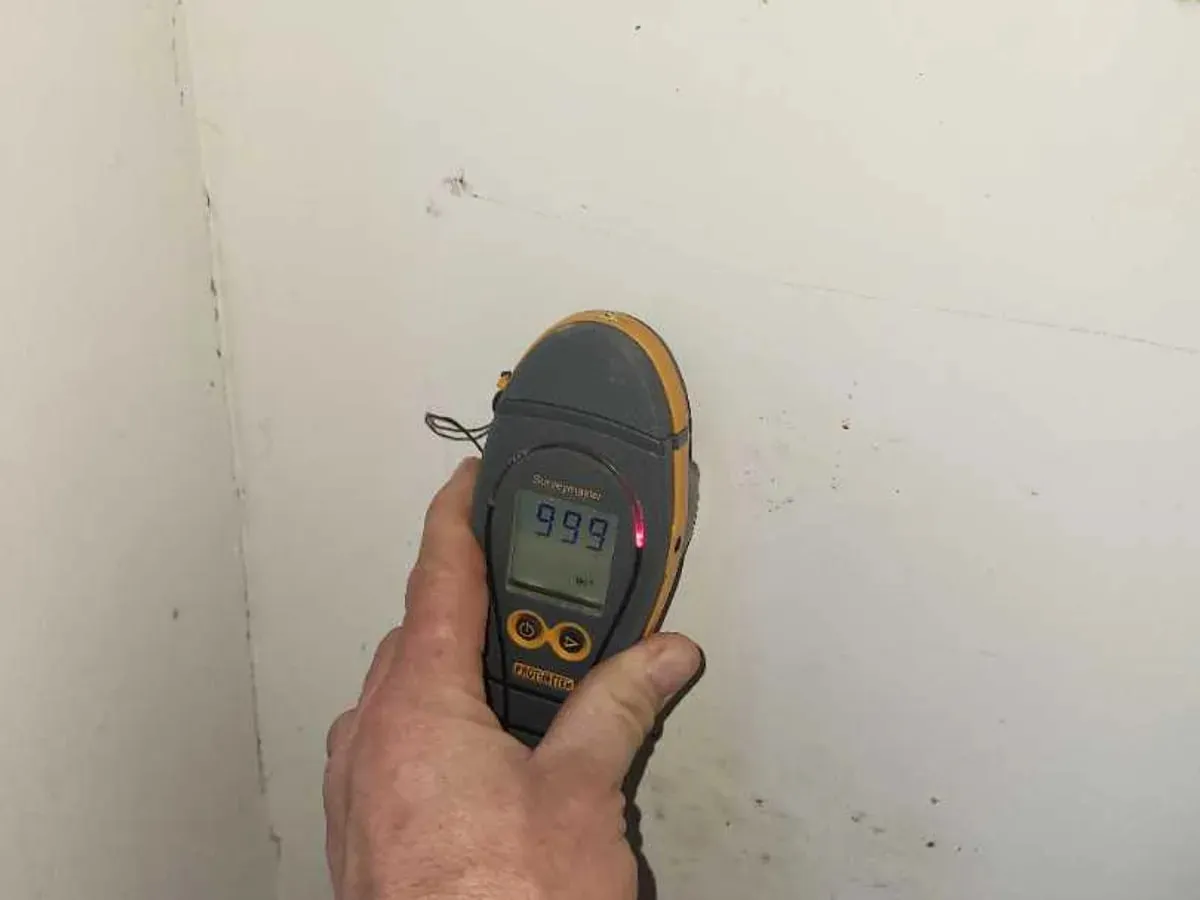
Water can move along a pipe, through a void or across building materials before becoming visible. Floor layers and boxing can hide part of that journey. The lowest visible patch or wettest reading may be away from the failed connection.
Record the affected surfaces together: a mark on the ceiling, swollen skirting in the next room and damp flooring may belong to one investigation. Equally, more than one fault can be present.
Damage in two rooms can have one source
On the Stafford job, damage affected the kitchen and a downstairs bedroom. The bathroom above was one possible source, but a failed pressure test and inspection of the concealed route led to a copper supply pipe behind the kitchen wall. Dye testing did not reveal a bathroom waste leak in the inspected area.
The relevant question was which system could account for the damage, not which room contained the largest stain.
The first opening may reveal the direction of travel
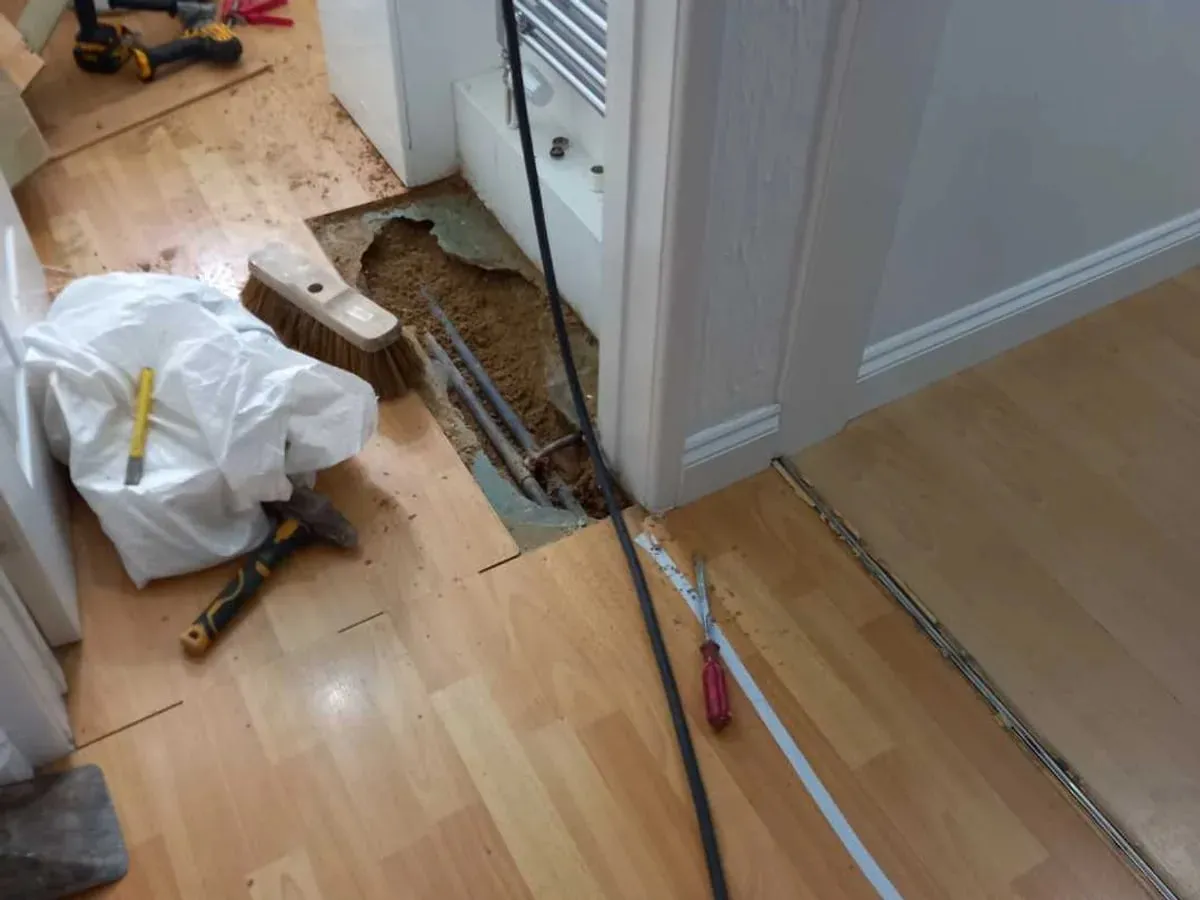
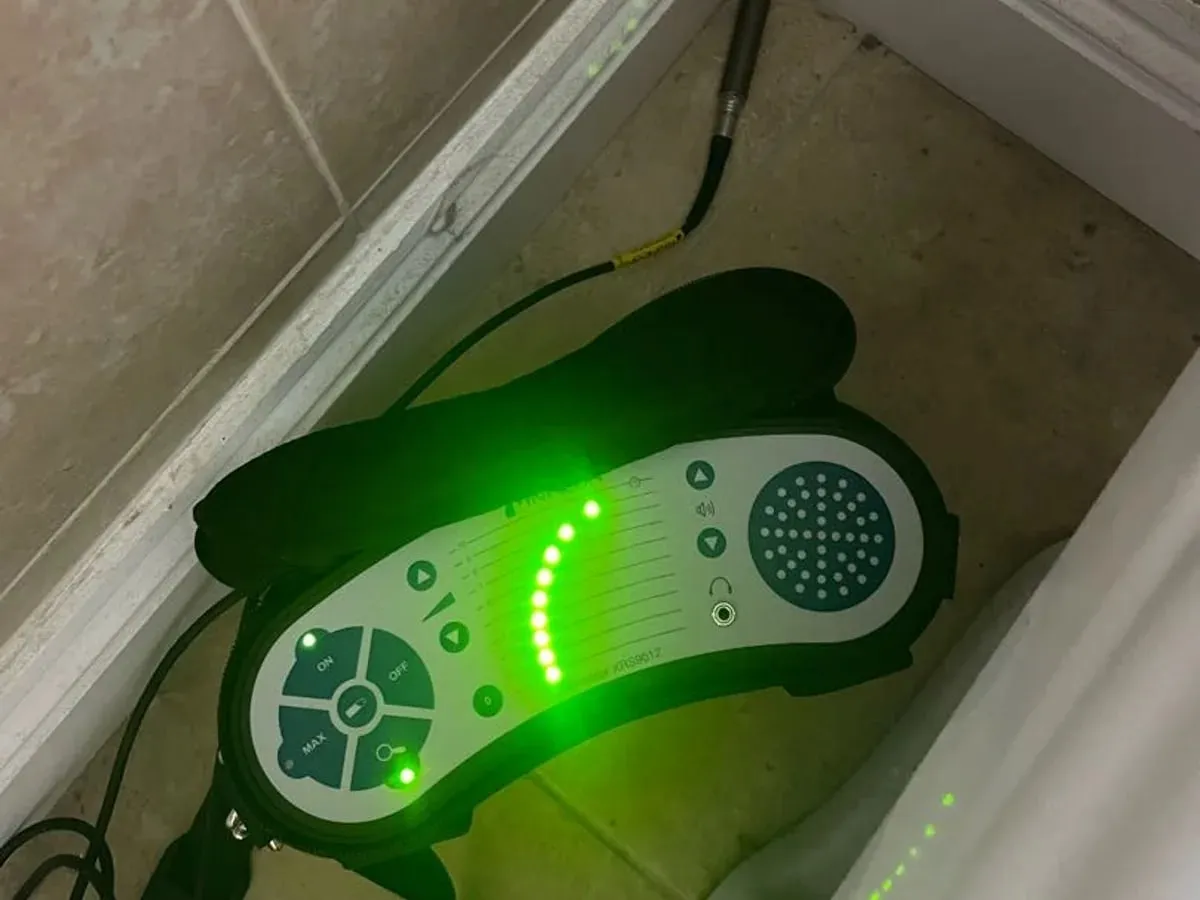
In East Dereham, thermal, gas and listening checks had not located the heating leak. Opening the damp WC doorway revealed screed that became wetter towards the hallway. A second opening near the radiator exposed a split pipe bend.
This was a progressive investigation, not a precise non-invasive find. It illustrates why the engineer may need to revise the access plan as new evidence appears.
Record changes before covering them up
- Photograph each affected surface, including enough of the room to locate the mark.
- Note when it appeared and whether it changes after heating, bathroom use or rain.
- Record pressure loss or unexplained meter movement, if already observed.
- Keep details of earlier openings, repairs and changes to the pipe route.
These observations help frame the investigation; they are not proof that plumbing is the cause. Condensation and water entering from outside can also produce damp.
Match the next step to what is known
For a concealed pipe suspected inside a partition, read the wall and boxing guide. For a patch below a bathroom, read how the source above a ceiling is investigated.
Once a source has been repaired, existing moisture still needs consideration. The case records distinguish fixing the pipe from subsequent drying and making good; a repaired pipe does not mean a wall is ready to redecorate.