Describe the whole affected area
Useful observations include recurring paint damage, a damp skirting line, staining near a ceiling and a wall that becomes wetter after fixtures are used. Identify the rooms on both sides of the wall and any bathroom or pipework above it.
Boxing may carry several services through the same space. A wet patch alongside it does not establish which pipe, joint or fixture is responsible. Water can travel before a stain appears.
Identify the pipe route before opening
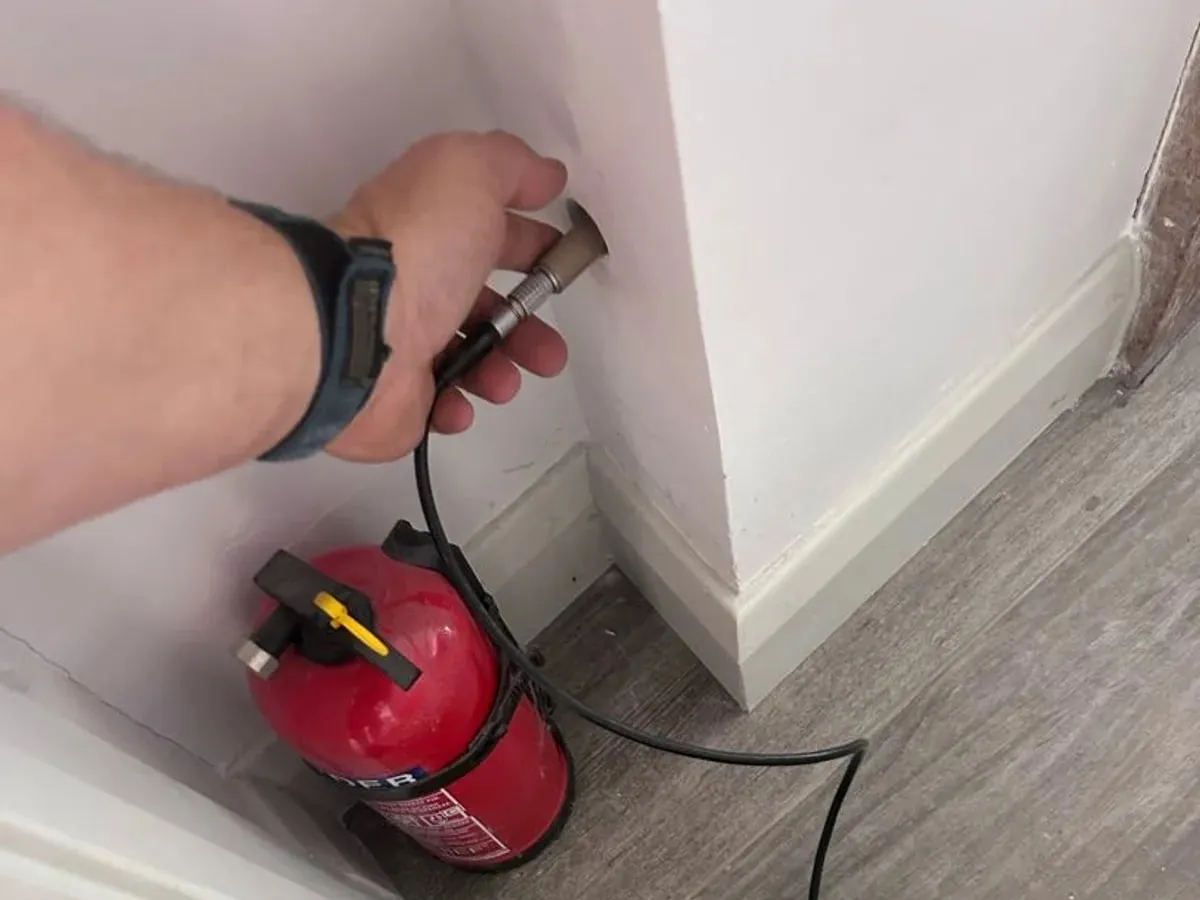
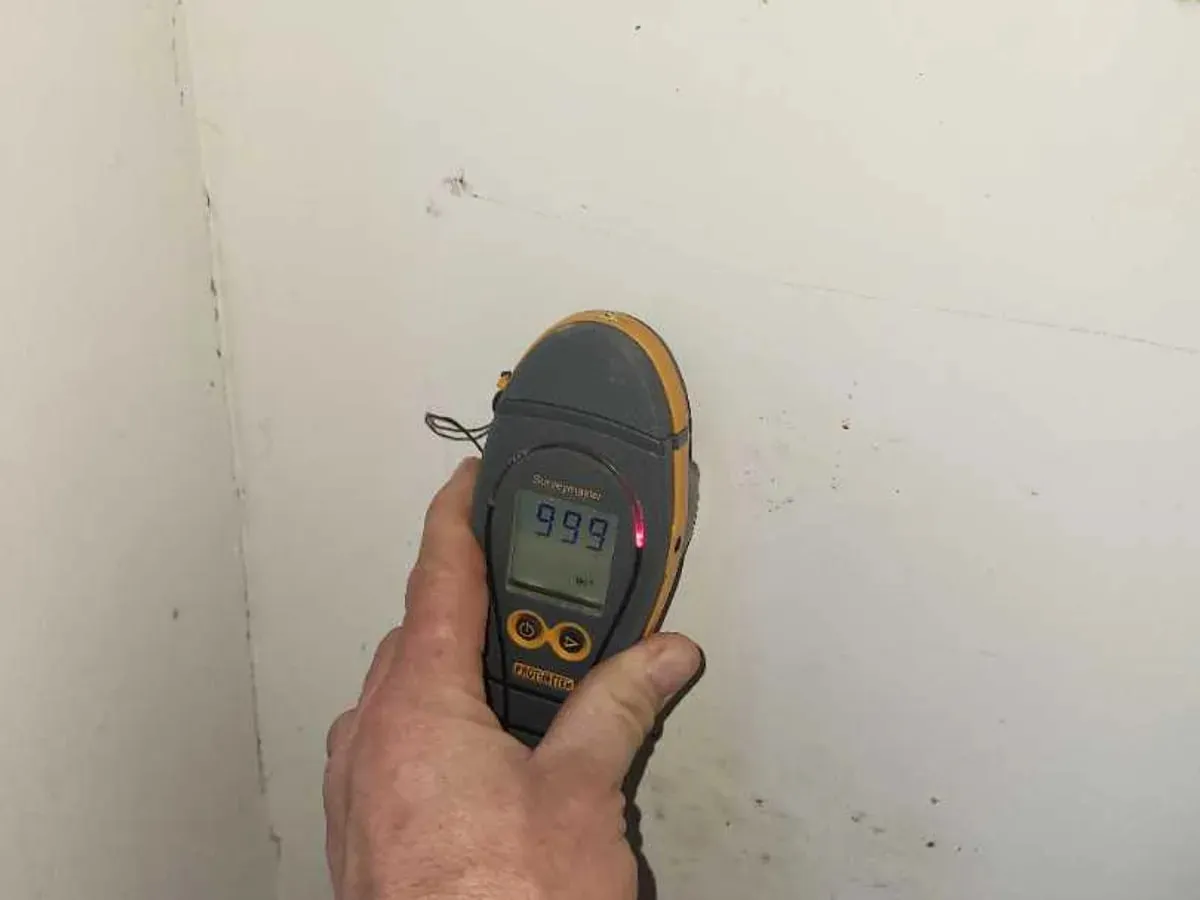
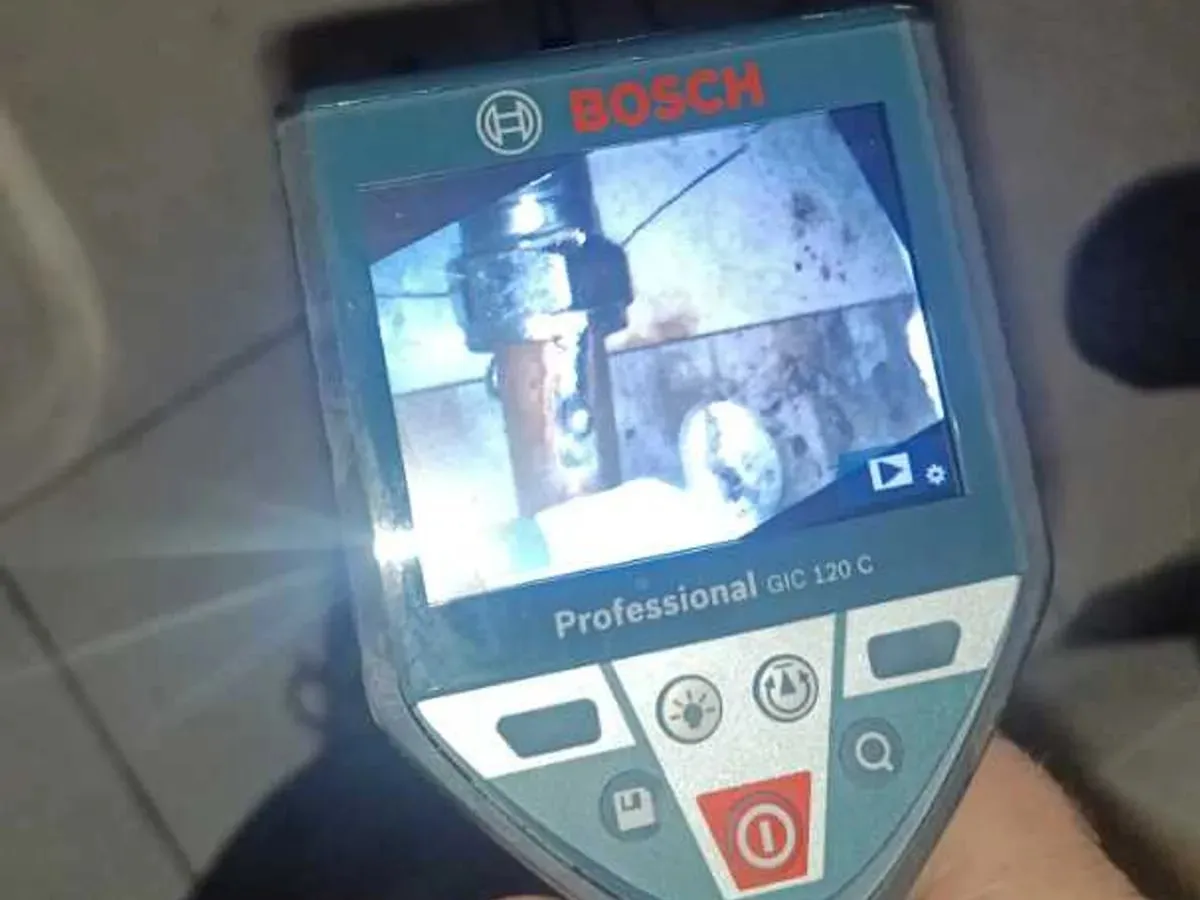
In the Exeter kitchen, thermal imaging mapped heating routes while initial gas and listening checks were inconclusive. Further gas testing gave a clearer indication at the boxing, and an endoscope confirmed pipework inside. Opening that area then revealed a separated fitting.
The case shows different tests answering different questions: where pipes run, where a signal appears and what is actually inside the void.
An inspection hole and a repair opening serve different purposes
A camera may fit through a small opening, but that does not mean the same opening gives enough room to remove and replace a fitting. Pipe position, nearby services and the space required to work affect the access needed.
Before work starts, identify finishes you are concerned about and establish who can authorise opening them. Discuss whether boxing panels can be removed, whether an existing hatch helps and what would happen if a larger opening is needed. Do not cut into a wall to prepare for the visit.
Separate the pipe repair from the wall restoration
In Stafford, the concealed pipe was repaired, while drying, wall restoration and reinstating the boxing were follow-on work. In Southampton, access near the kitchen ceiling exposed one leak and another faulty fitting was found beneath the basin.
Those outcomes differ. Read what to agree about access, repairs and making good, and use the survey preparation checklist to organise the information and access needed.