Beneath tiled, screed and concrete floors
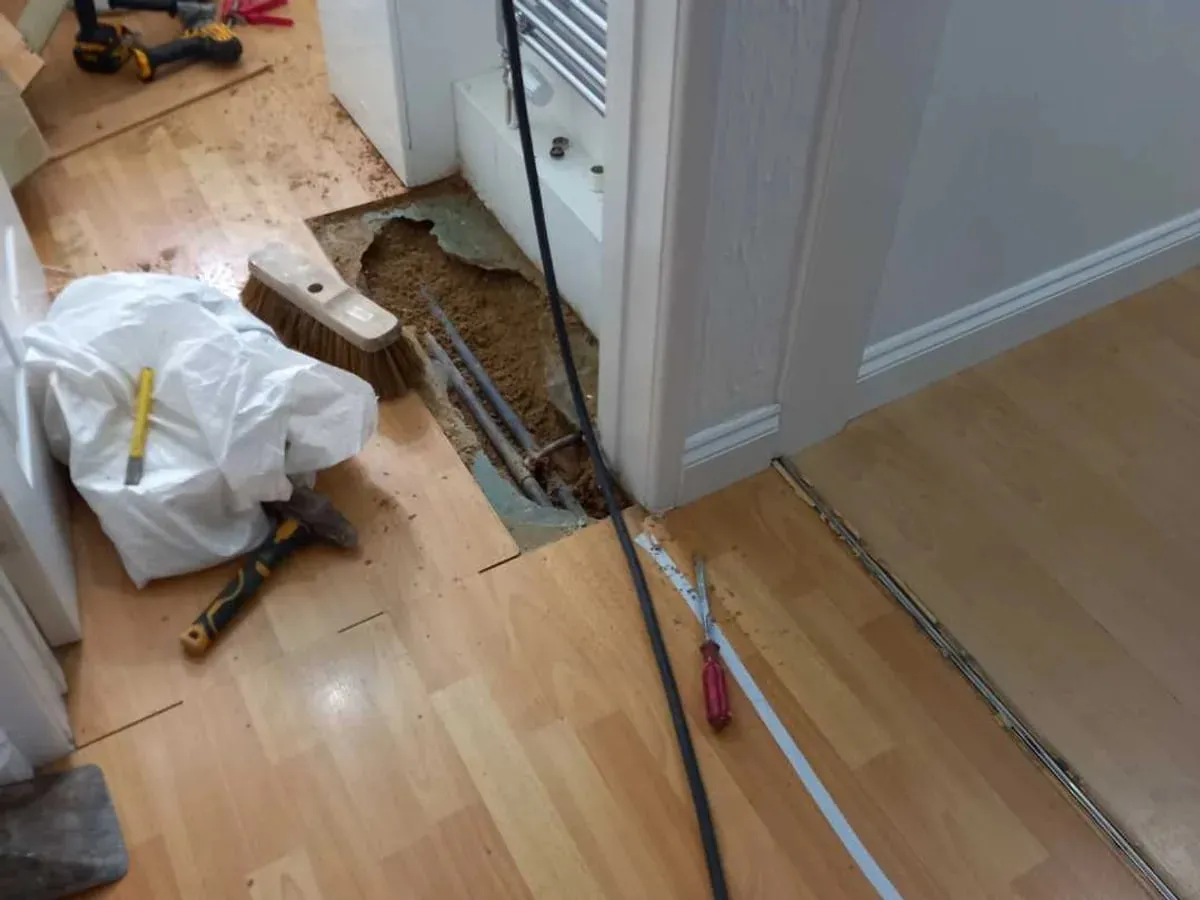
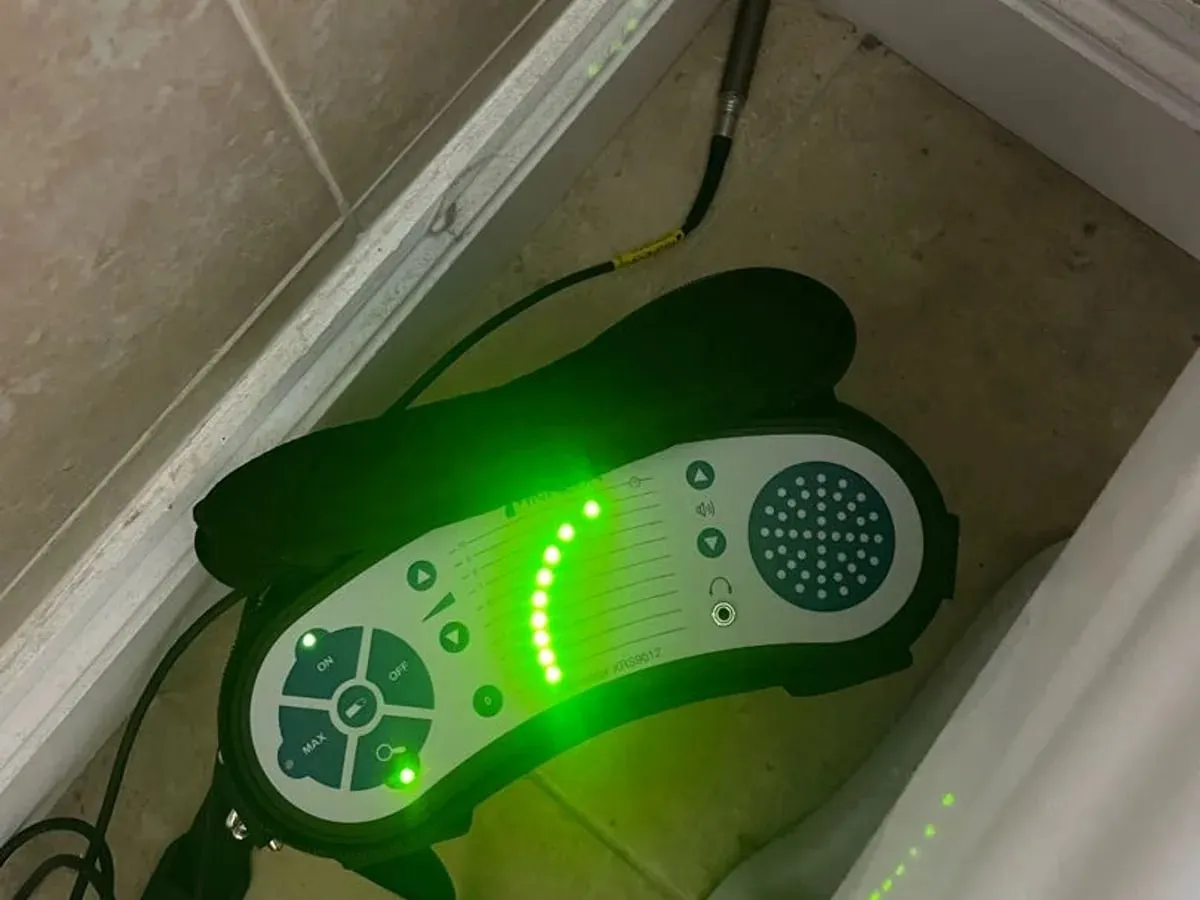
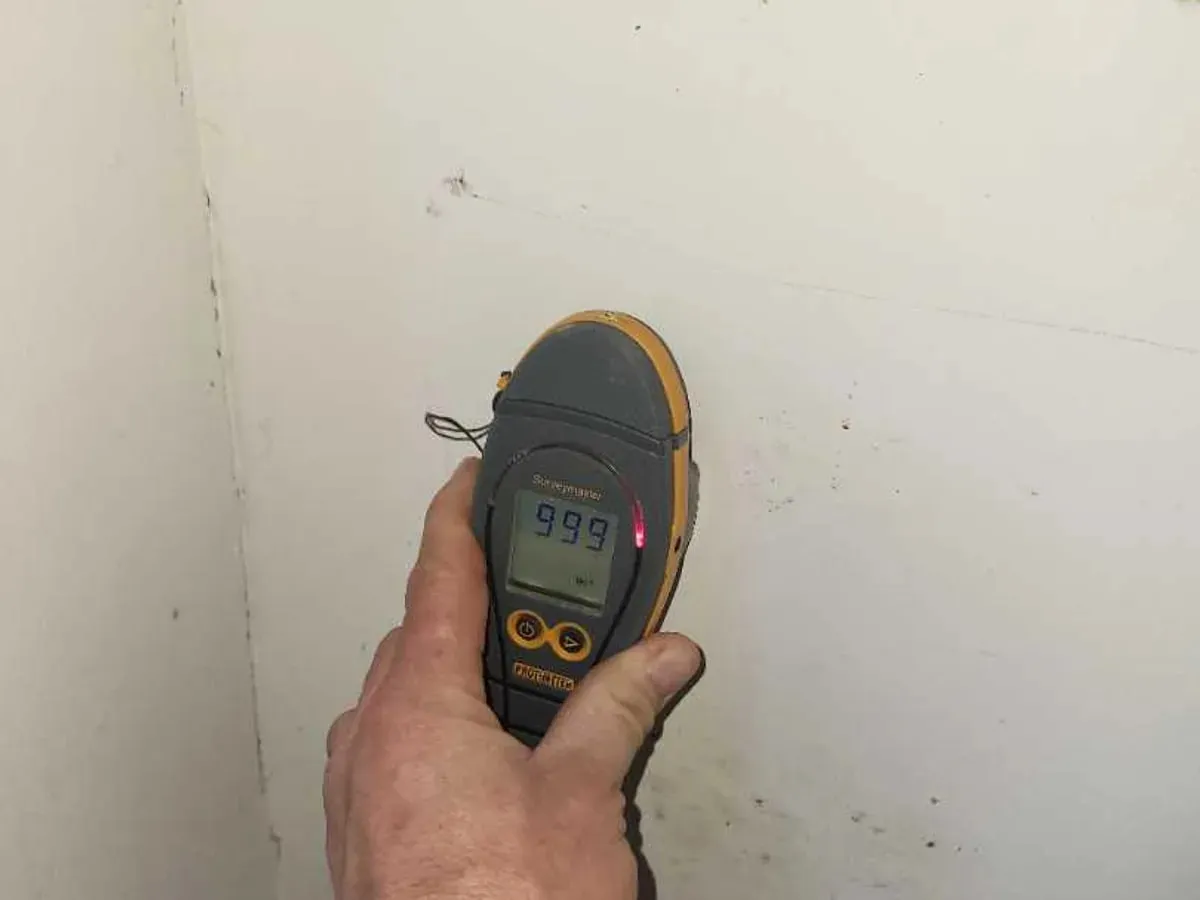
Damp grout, lifting flooring or an unexplained warm patch can lead to a pipe buried in screed. Moisture mapping and thermal imaging help identify areas to test; acoustic listening or tracer gas can then help narrow the position. The wettest tile may be some distance from the actual defect.
Read about investigating leaks beneath tiles and concrete.
Behind walls and pipe boxing
Boxing can carry several pipes through the same space, and water can run inside a wall before it stains the surface. Circuit tests, moisture readings and an inspection camera through a suitable opening help show which pipe is involved. A camera cannot see through solid masonry.
Read about leaks behind walls and boxing.
Above a ceiling below a bathroom
A stain below a bathroom may come from a supply pipe, a waste pipe, a seal or a fitting. The engineer checks how the damp changes when particular fixtures are used and follows the moisture readings before suggesting where to open.
Read about ceiling leaks below bathrooms.
Behind kitchen units, basins and toilets
Sink units, washing machine spaces, basins and toilets can sit right on top of the pipework. On several ADI jobs a unit or fixture had to come out before the pipe could be reached, and more than one fault turned up in the same room.
Read about leaks behind kitchen units, basins and toilets.
Concealed central heating runs
Repeated pressure loss may come from hidden pipework, but boiler components, radiator valves and visible connections also need checking. An engineer can test sections and investigate the concealed run if those checks point towards it. Pressure loss alone does not establish where the fault is.
Pipes outside the building fabric
Some hidden leaks are not inside a wall or floor finish. A supply pipe buried under a drive or garden, or an underfloor heating loop laid in screed, needs its own approach: tracing a buried run, or isolating and testing individual loops. ADI covers these in its dedicated guides to supply pipe leaks and underfloor heating leaks.
When a different investigation is needed
Rain penetration, condensation and drainage faults can look like a concealed supply leak. Drains and waste pipes may need controlled water tests, dye or a camera inspection. Tell the office if damp follows rainfall or only appears after using a particular shower or appliance so the visit can be planned accordingly.