A bathroom-floor leak reached by removing the toilet
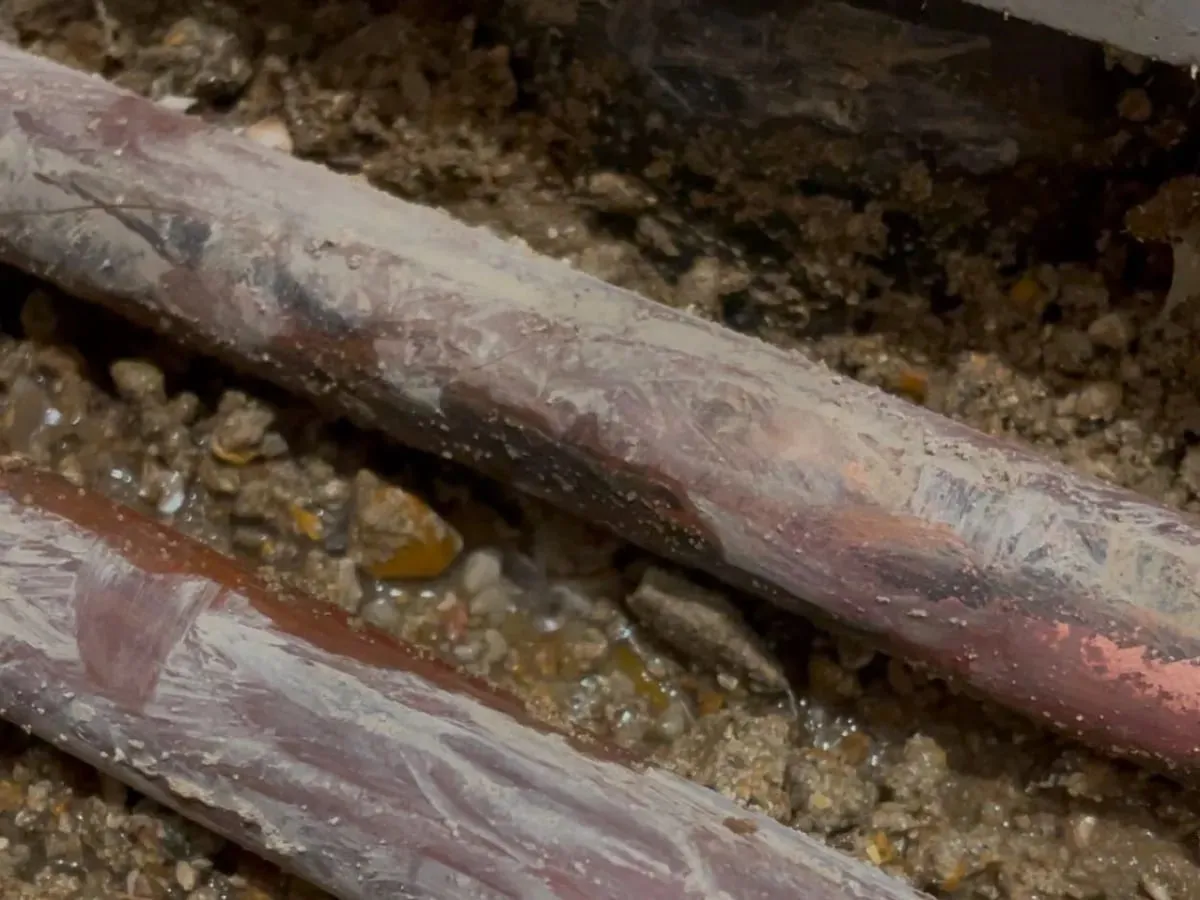
Heating pressure dropped within ten minutes. Moisture mapping and tracer gas pointed to the bathroom corner, where opening the floor exposed a leaking 22mm heating pipe.
Signs of the leak in Billingshurst
The oil-fired heating system was below one bar. After topping up to two bar with the heating running, pressure dropped again within ten minutes.
How the hidden leak was located
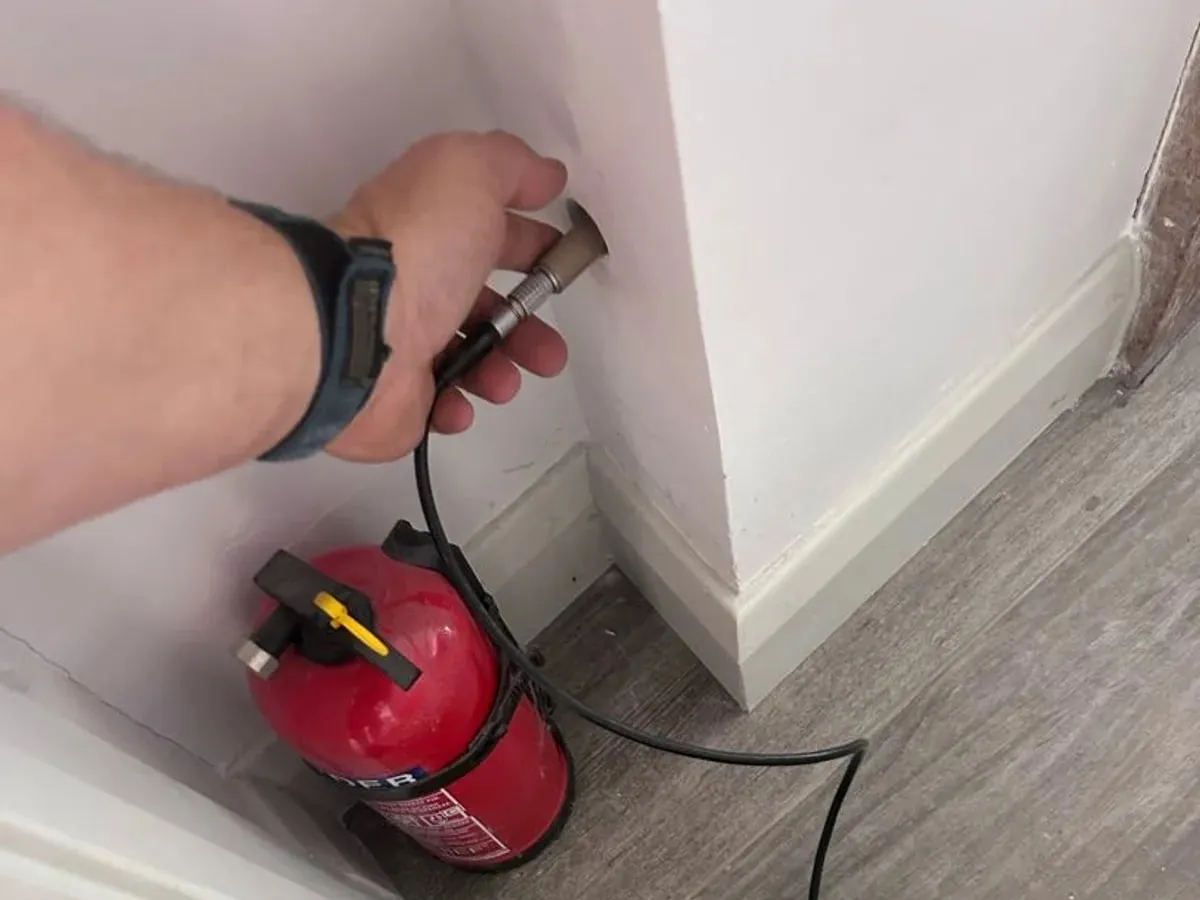
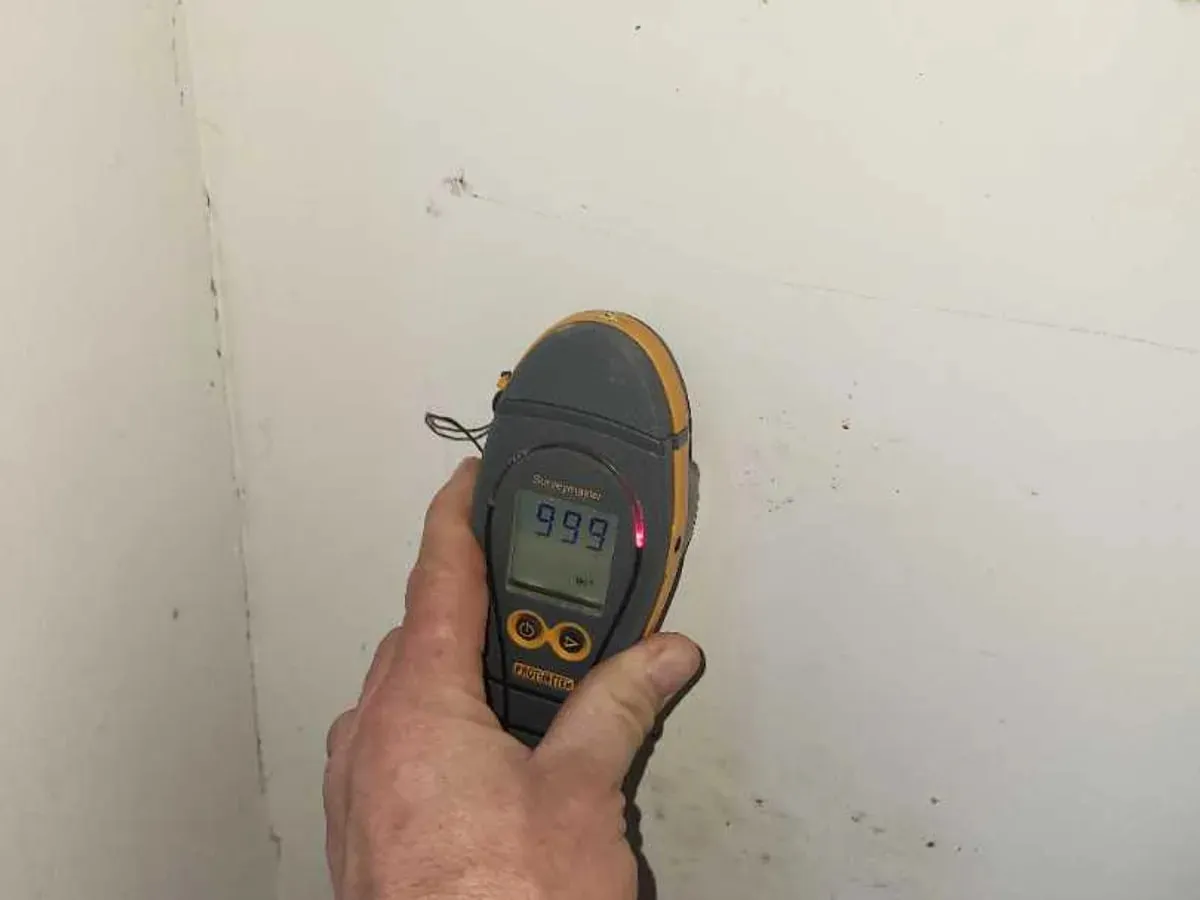
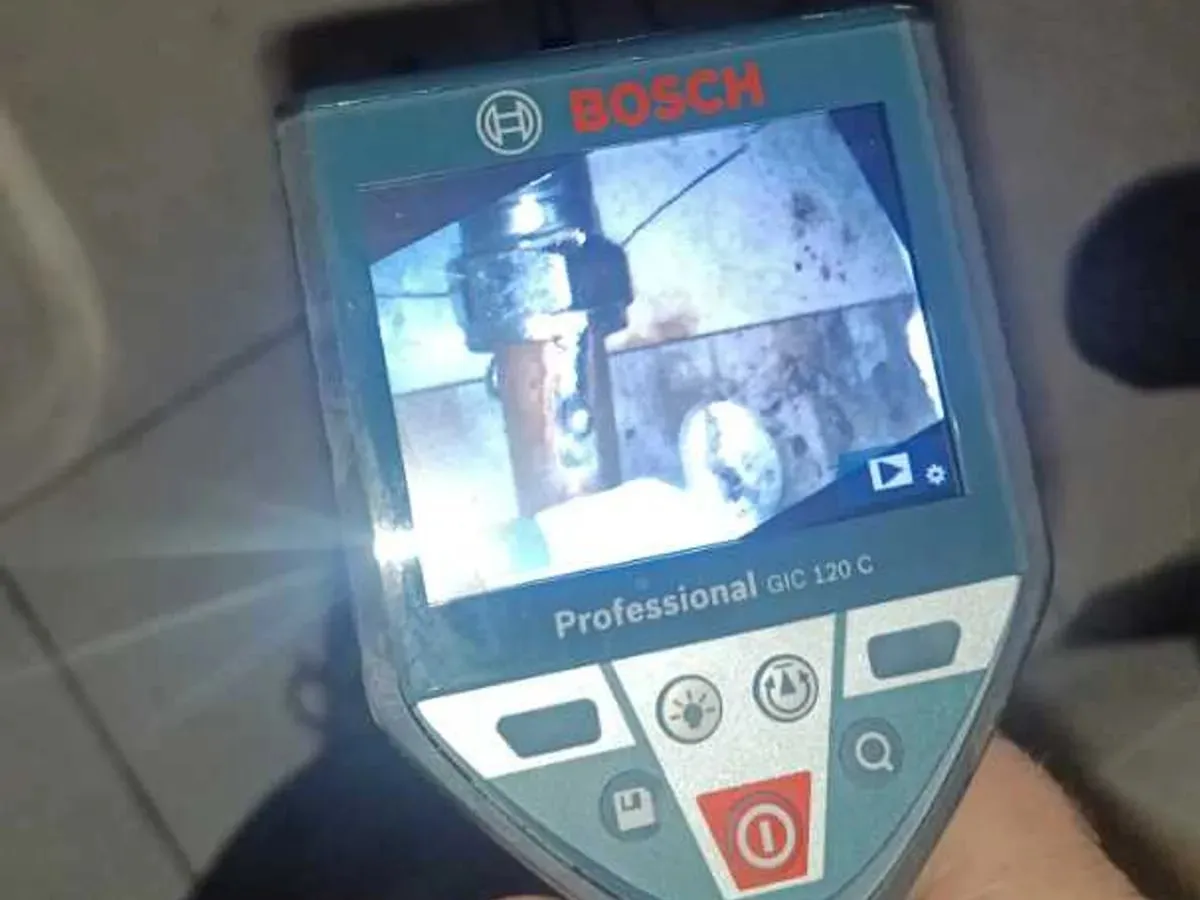
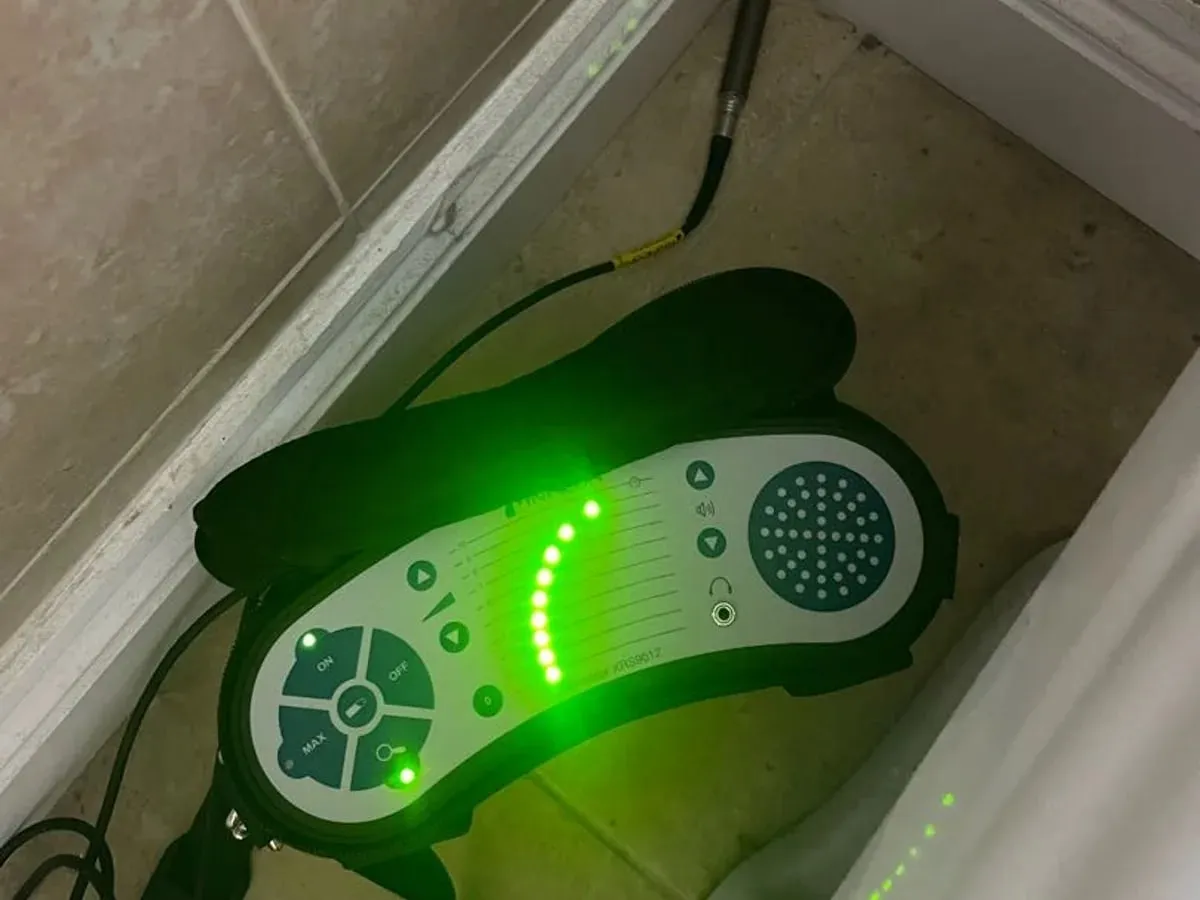
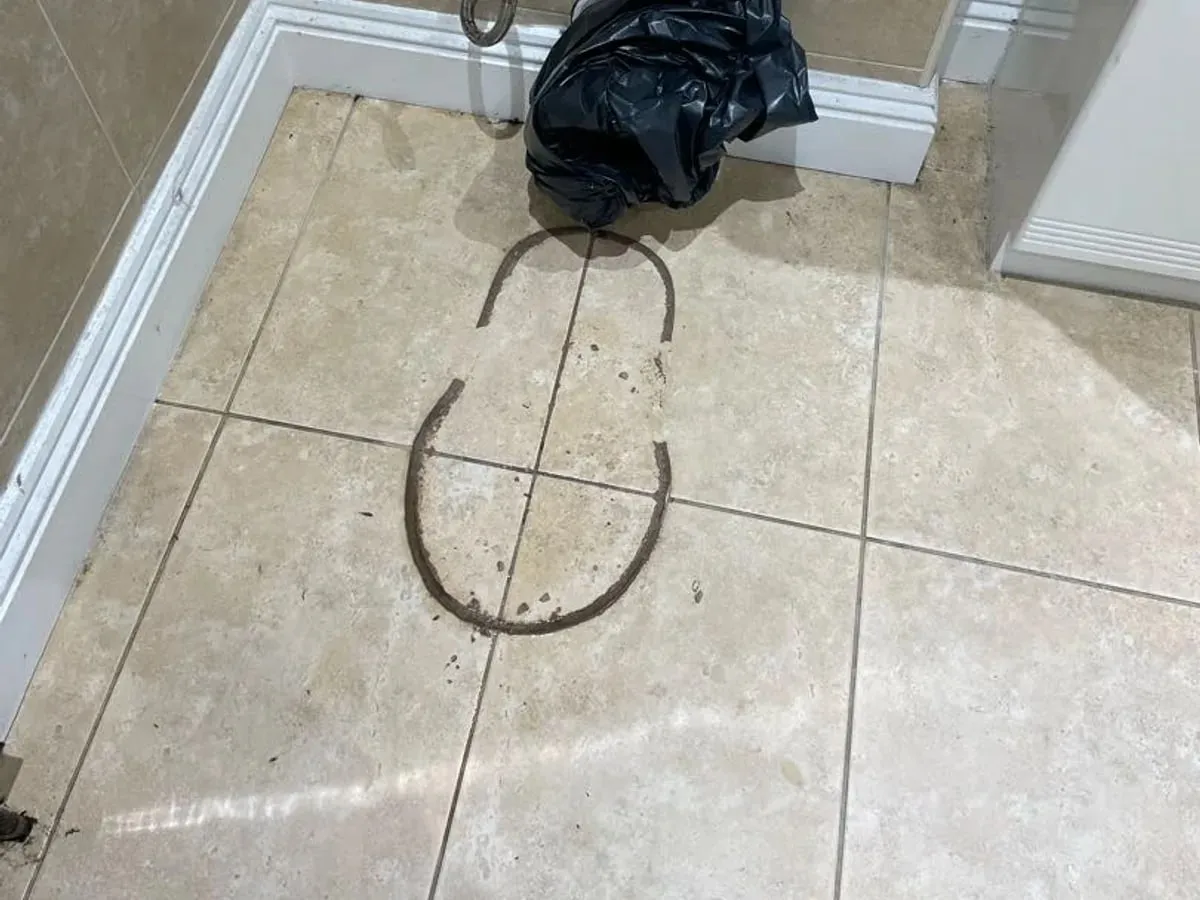
Thermal imaging mapped the pipe routes. Moisture readings were elevated in the downstairs bathroom, and lifting the adjoining lounge carpet revealed staining on the slab. Tracer gas introduced through a hallway radiator at one bar concentrated in the bathroom corner. Removing the toilet allowed access through the tiles and concrete.
Why this area was opened
The gas concentration at the bathroom corner was considered alongside moisture findings. Removing the toilet made it possible to open the tiles and concrete above the pipe.
The investigation, step by step
- 01Confirmed a pressure drop after topping up the heating.
- 02Mapped pipe routes and moisture, including the adjoining lounge.
- 03Drained the system and introduced tracer gas through a hallway radiator.
- 04Detected a strong gas concentration in the bathroom corner.
- 05Removed the toilet and opened the tiles and concrete.
- 06Exposed the leaking 22mm pipe and made a temporary repair.
What was found
- Found
- A leak on 22mm central heating pipework beneath the bathroom floor.
- Repair
- A temporary repair used a 22mm-to-15mm reducer, 15mm fittings and 15mm plastic pipe.
- Recommended afterwards
- Arrange a permanent copper repair, replace the utility-room drain-off valve, and dry the bathroom and adjoining lounge before reinstatement.
- Worth knowing
- The repair was temporary. The record does not support a completed permanent repair or reinstatement.
What this investigation shows
Locating and reaching a leak did not mean a permanent repair was completed. The temporary repair and recommended permanent work must be kept distinct.
Read about agreeing access and repair work and understanding the recorded outcome.