Start with the extent of the moisture
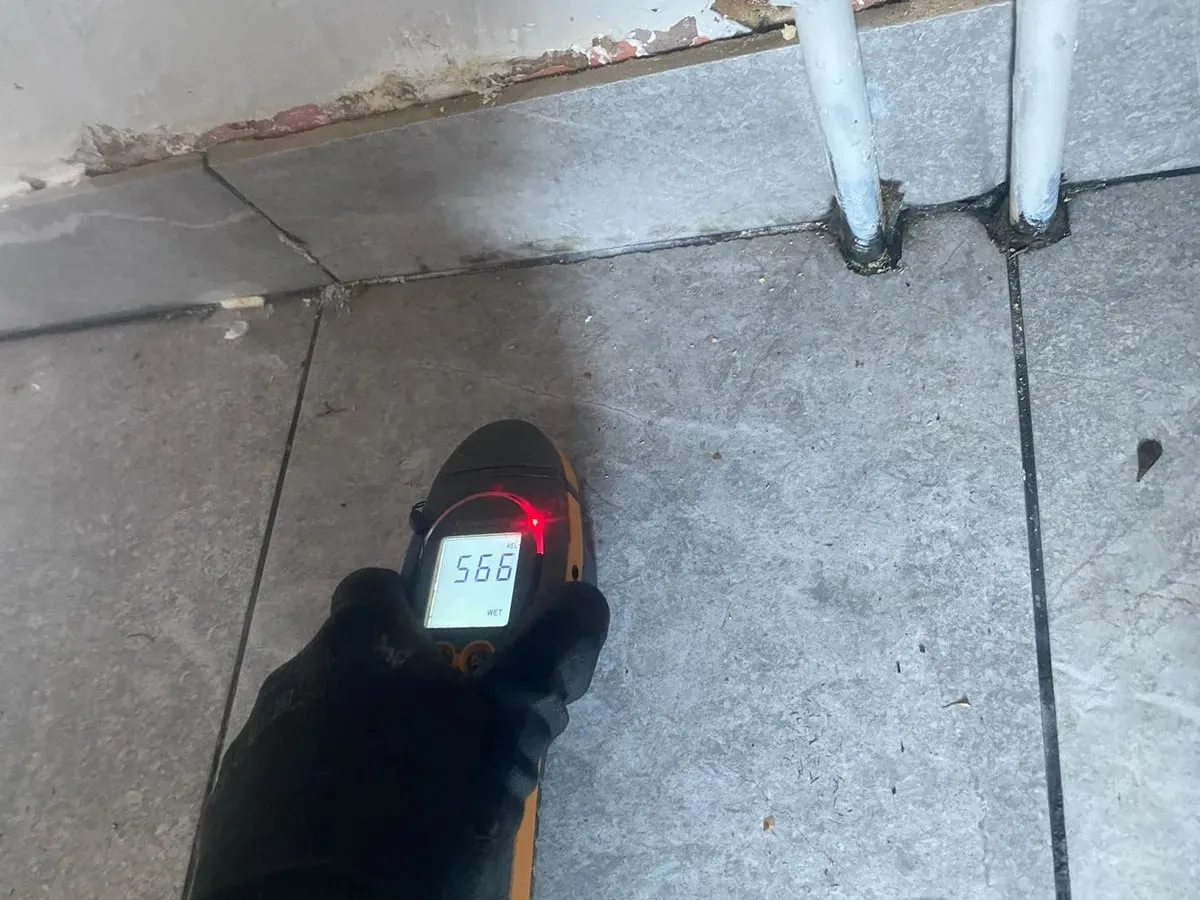
A moisture meter helps compare affected and apparently dry areas. The engineer looks at the pattern across a wall or floor, alongside the finish and construction. A high reading does not identify a particular pipe joint or prove that the nearest pipe is leaking.
On the Stafford wall investigation, moisture and thermal checks mapped damage in more than one room. Pressure testing and inspection of the concealed route were still needed before the pipe was exposed.
Use thermal images to follow routes, not see through walls
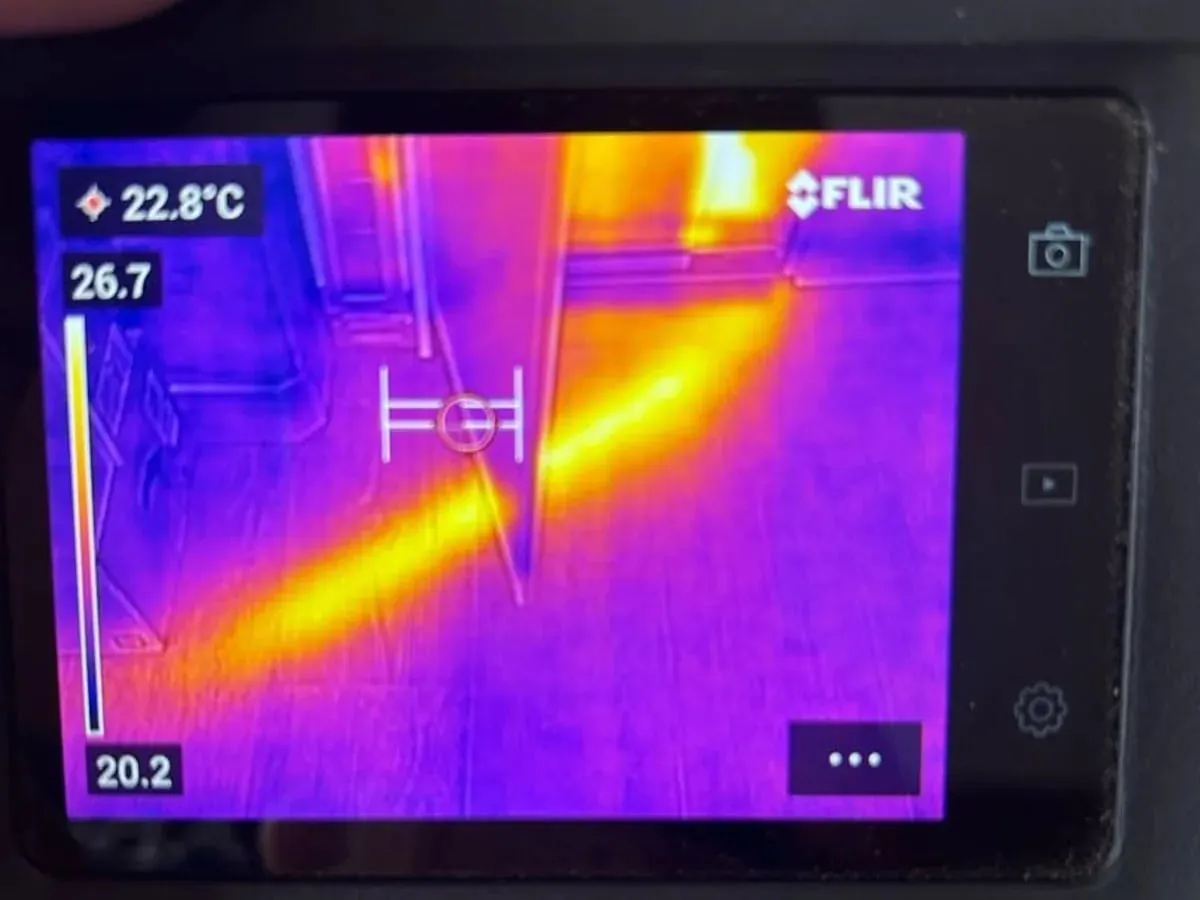
A thermal camera records surface temperature differences. Warm pipe routes can help explain where a heating or hot-water run crosses a room. The image is a clue about the surface; it is not a view through the concrete or plasterboard.
In Exeter, thermal imaging helped map the pipes but did not reveal the failed fitting inside the kitchen boxing. In East Dereham, no unusual warm patch appeared even though a pipe bend was leaking beneath the hallway.
Establish which circuit is losing water
Accessible isolation points allow suitable sections of pipework to be tested separately. This can distinguish a hot-water fault from a cold-water or heating fault before deciding which concealed route to investigate.
On the March utility-room job, the cold circuit held pressure and the hot circuit did not. That difference directed the investigation to the hot pipe beneath the washing machine. A pressure result identifies the behaviour of the tested section, not the exact spot to open.
Look for a route out of concealed pipework
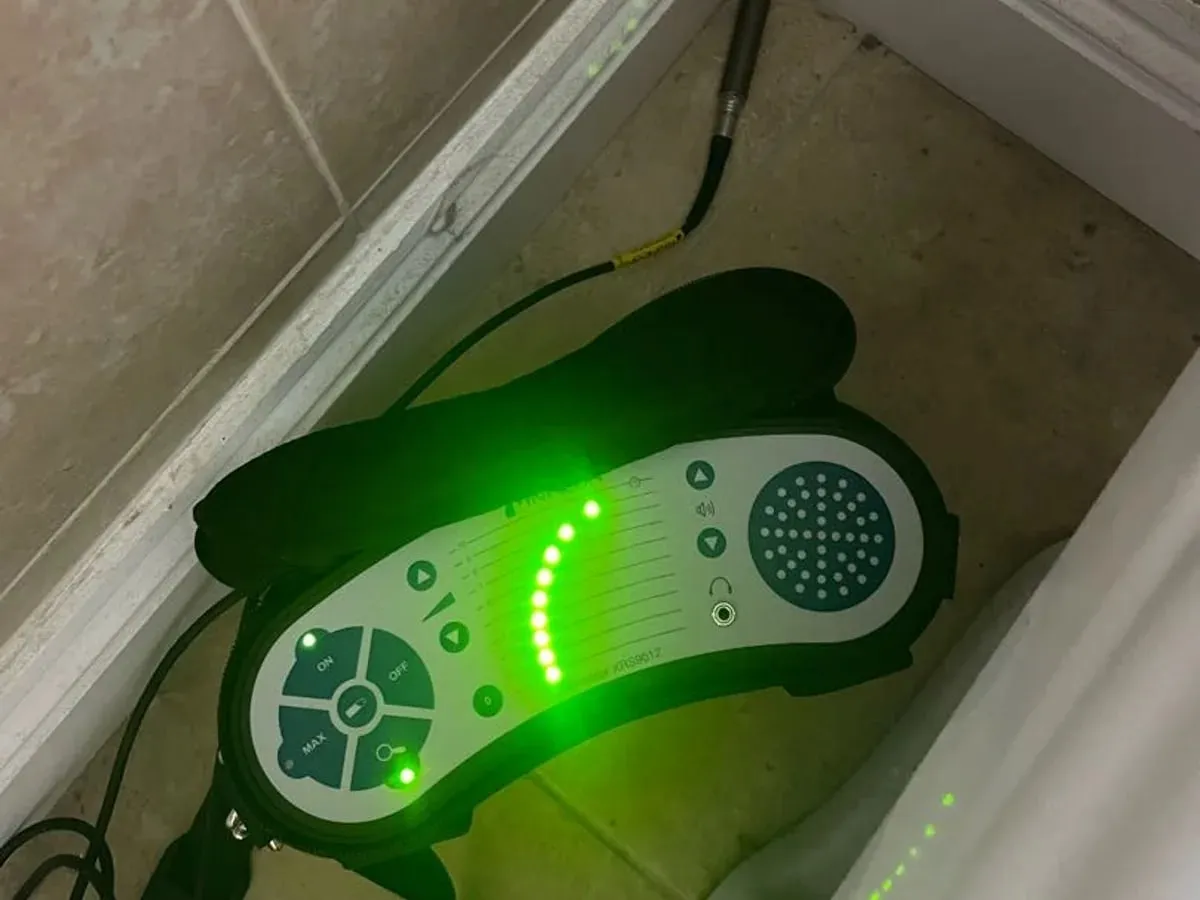
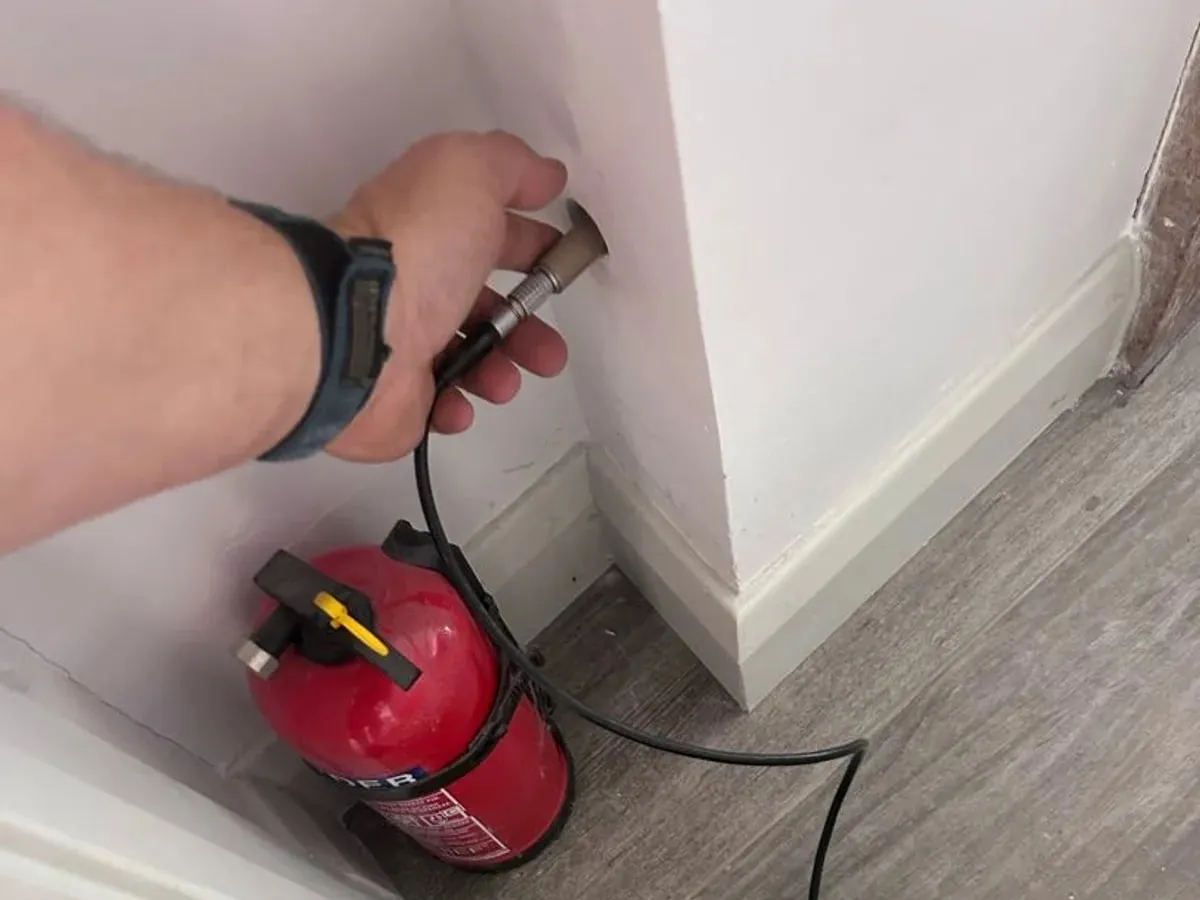
Tracer gas testing involves preparing suitable isolated pipework and checking where the test gas can be detected outside it. Floor layers, voids and pipe ducting affect how the indications should be interpreted. Preparation and testing are work for the engineer.
The Billingshurst bathroom investigation combined moisture readings with gas detected at a bathroom corner. The toilet then had to be removed to reach the pipe through the tiles and concrete. Initial gas readings in Exeter were less conclusive; further testing and an inspection camera were needed.
Check what an opening actually reveals
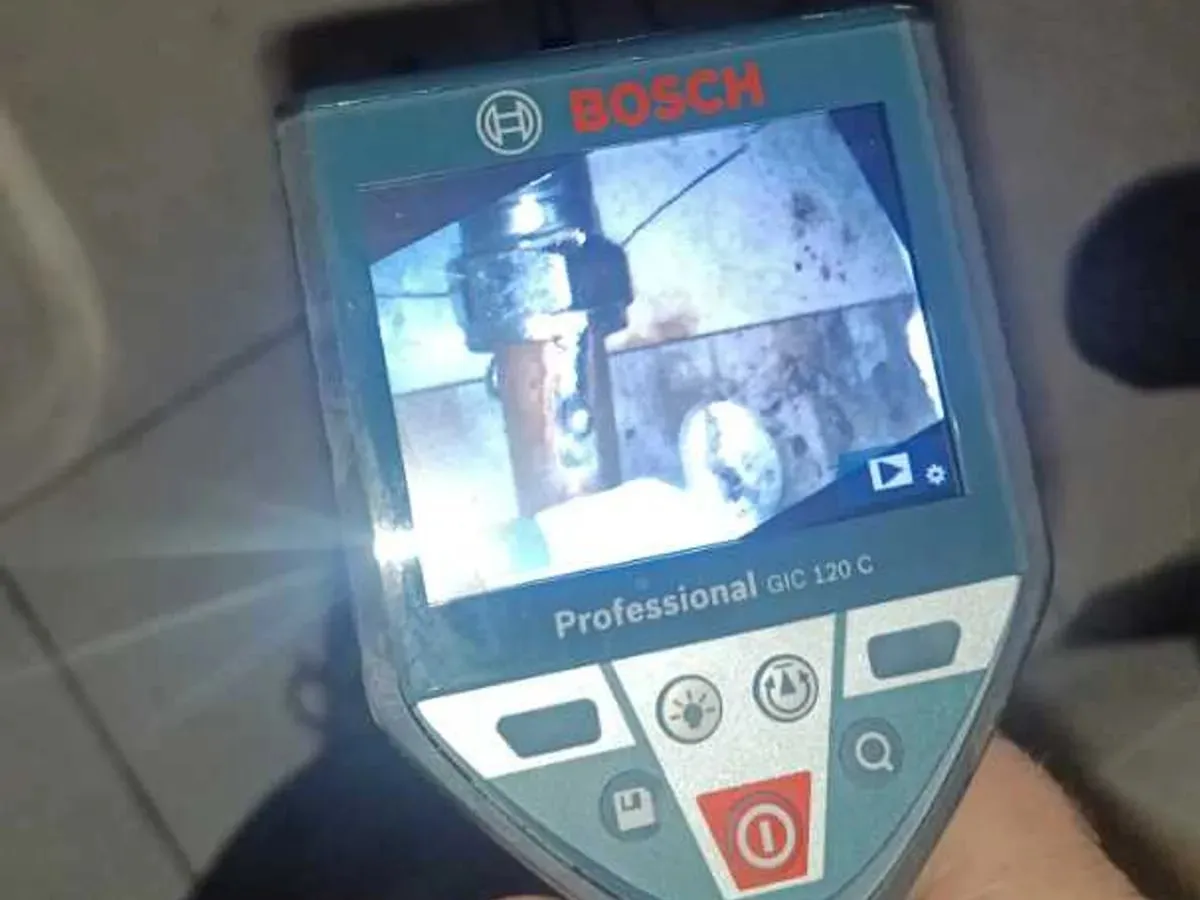
An inspection camera can help examine a void through a suitable existing or agreed opening. It can show a pipe route or connection that cannot be seen from the room. It needs a physical way in: it cannot look through a solid wall.
In Southampton, a damp meter and endoscope guided access to a copper pipe within the kitchen wall near the ceiling. A camera was also used in Exeter before the boxing was opened. See how walls and boxing affect access.
Use sound when it adds useful evidence
Listening can help narrow a search when a leak produces a usable signal. It is one part of a concealed-pipe investigation, rather than a requirement for every successful find.
In Lowestoft, tracer gas indicated the kitchen and acoustic checks narrowed the position. In East Dereham, listening and gas checks gave no leak signal: moisture and progressive opening led to the split pipe instead.
Choose an opening from the combined findings
Ask what the tests have established, what remains uncertain and why the proposed access point is useful. A negative result can change the next step without ruling out every possible leak.
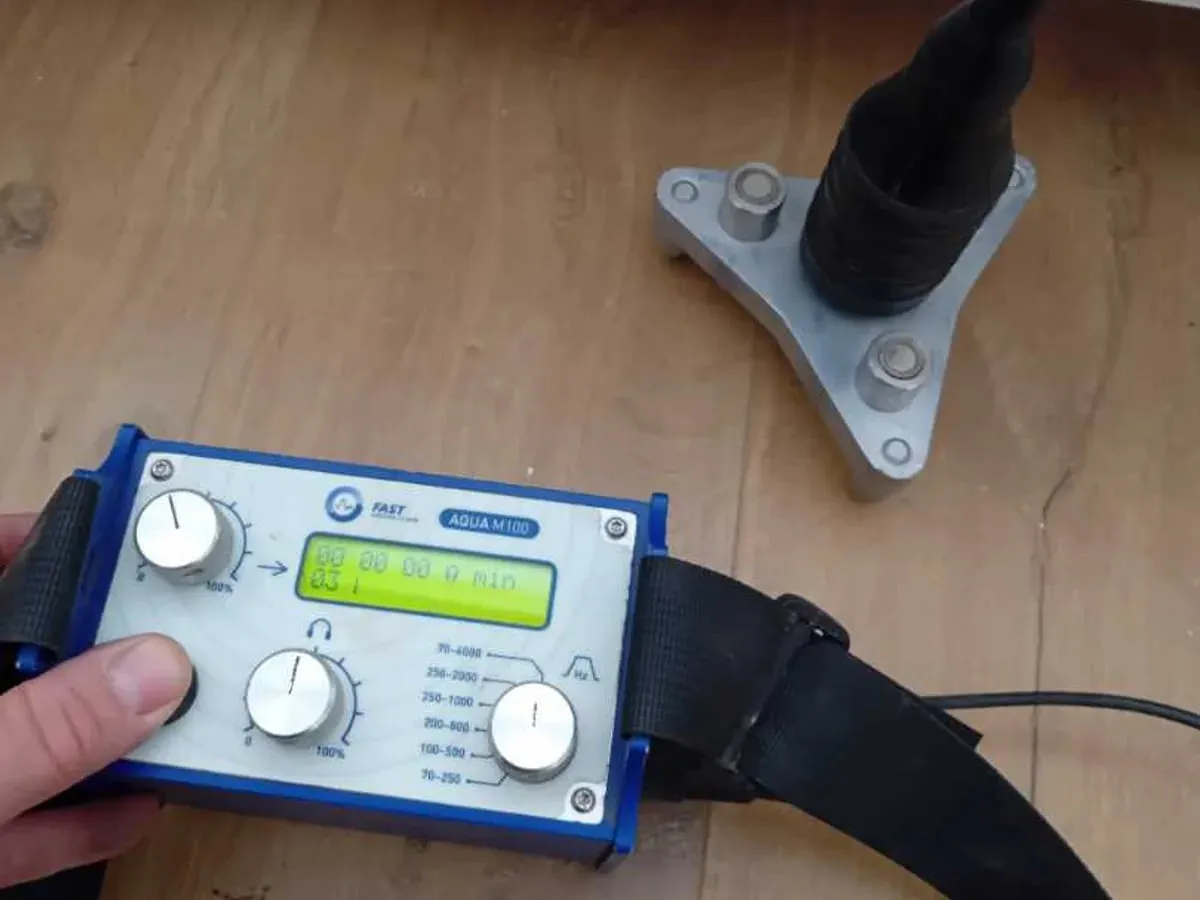
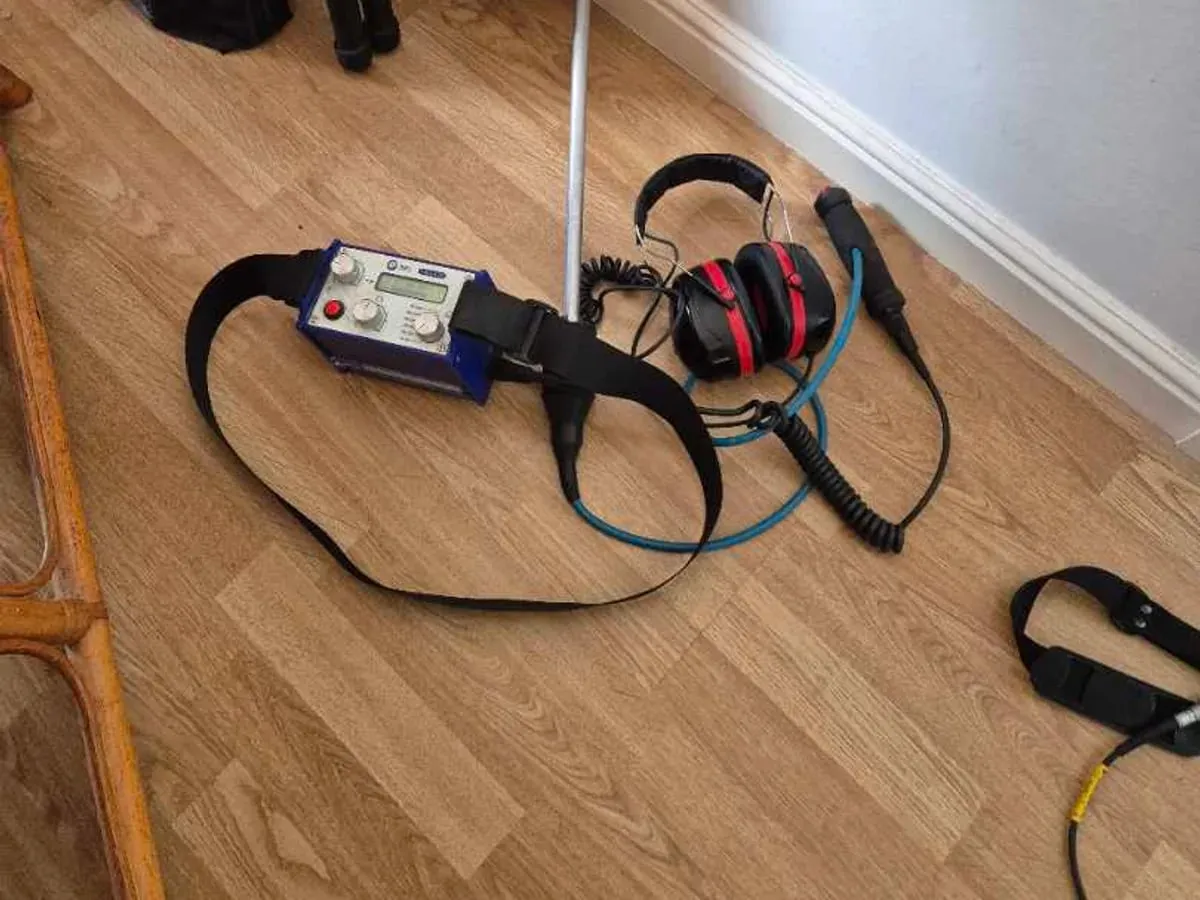
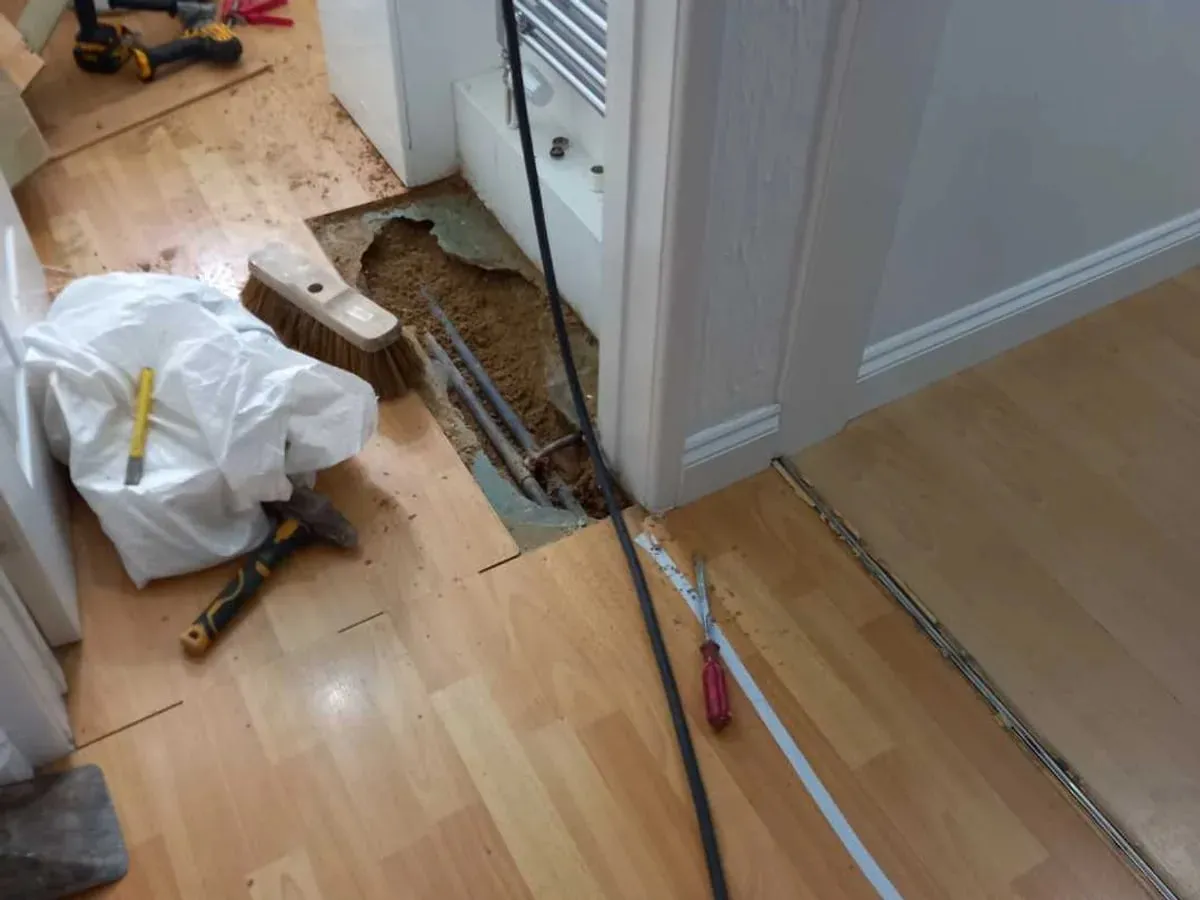
Our access and repair guide explains the difference between locating a fault, exposing it and reinstating the finish. The photographs below show equipment on real ADI jobs; the combination used at your property depends on the findings.