Damp at the WC doorway led back to the hallway
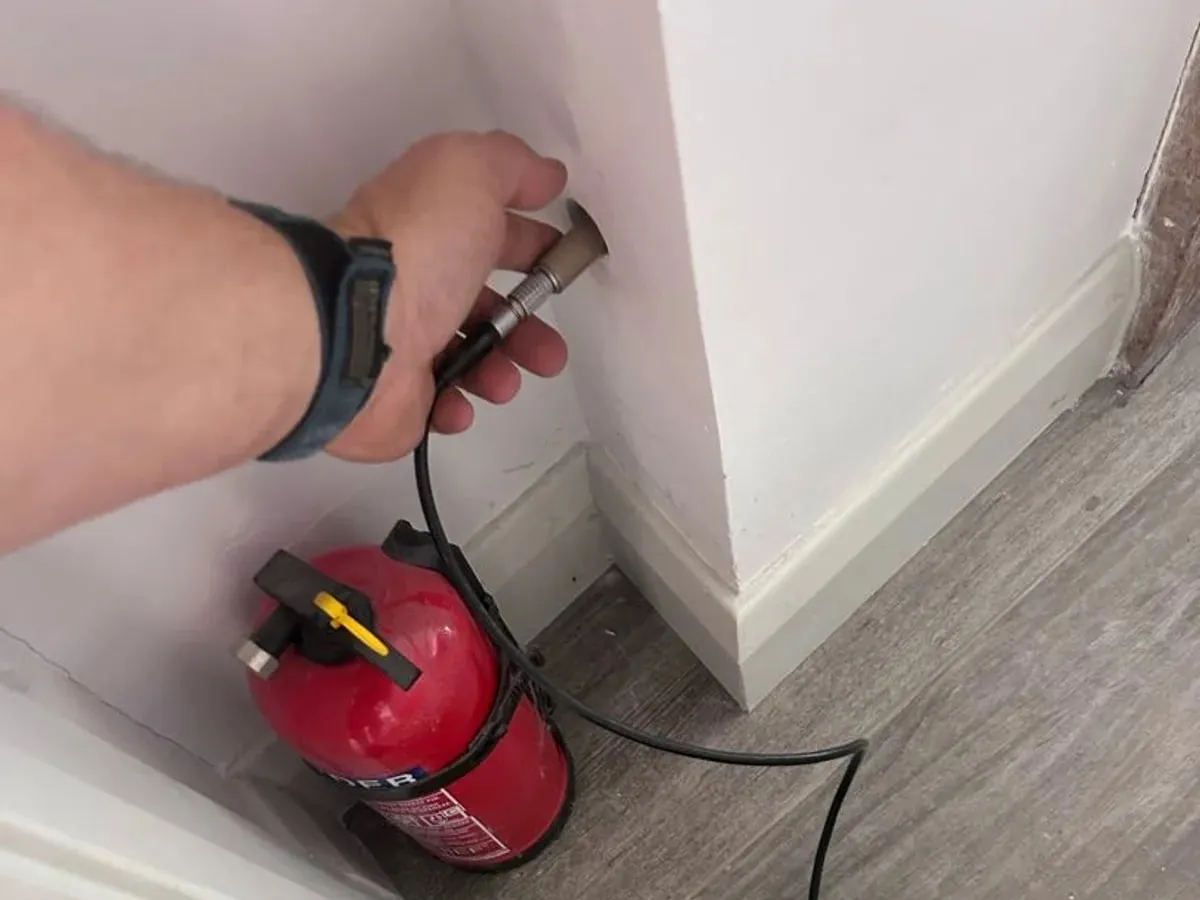
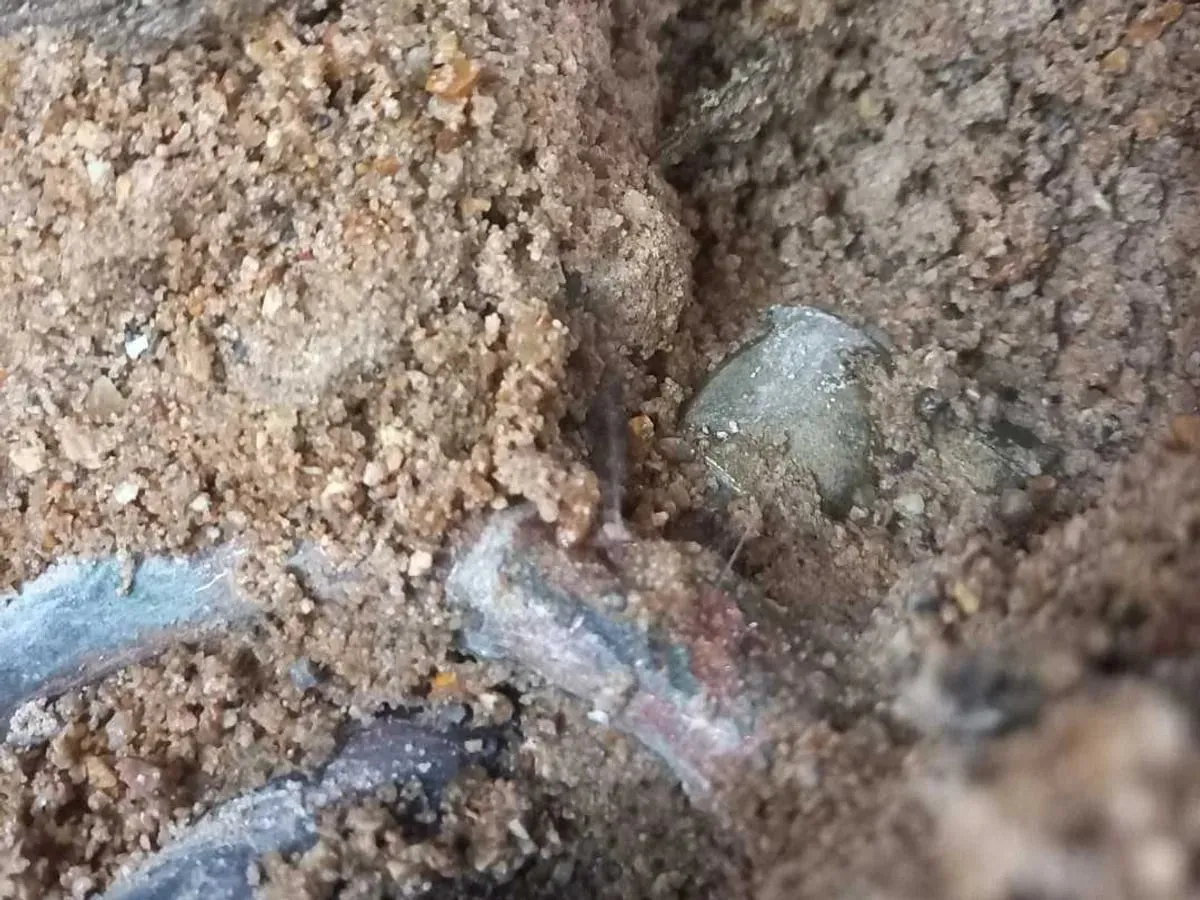
Thermal, tracer gas and acoustic checks did not identify this leak. Following moisture through the screed led to a split copper bend beneath the hallway floor.
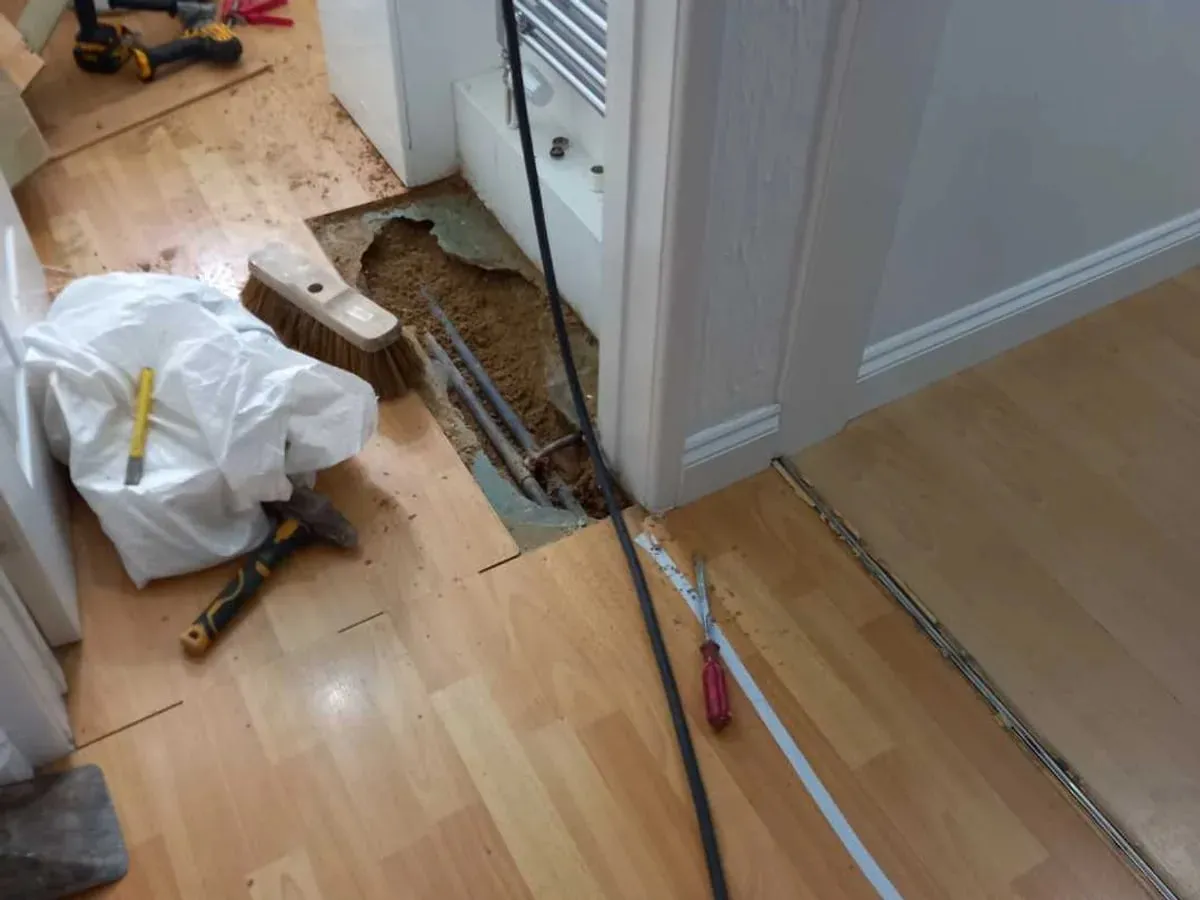
Signs of the leak in East Dereham
The heating system lost pressure over approximately 12 hours. Laminate beside the downstairs WC doorway was raised and the door was damp.
How the hidden leak was located
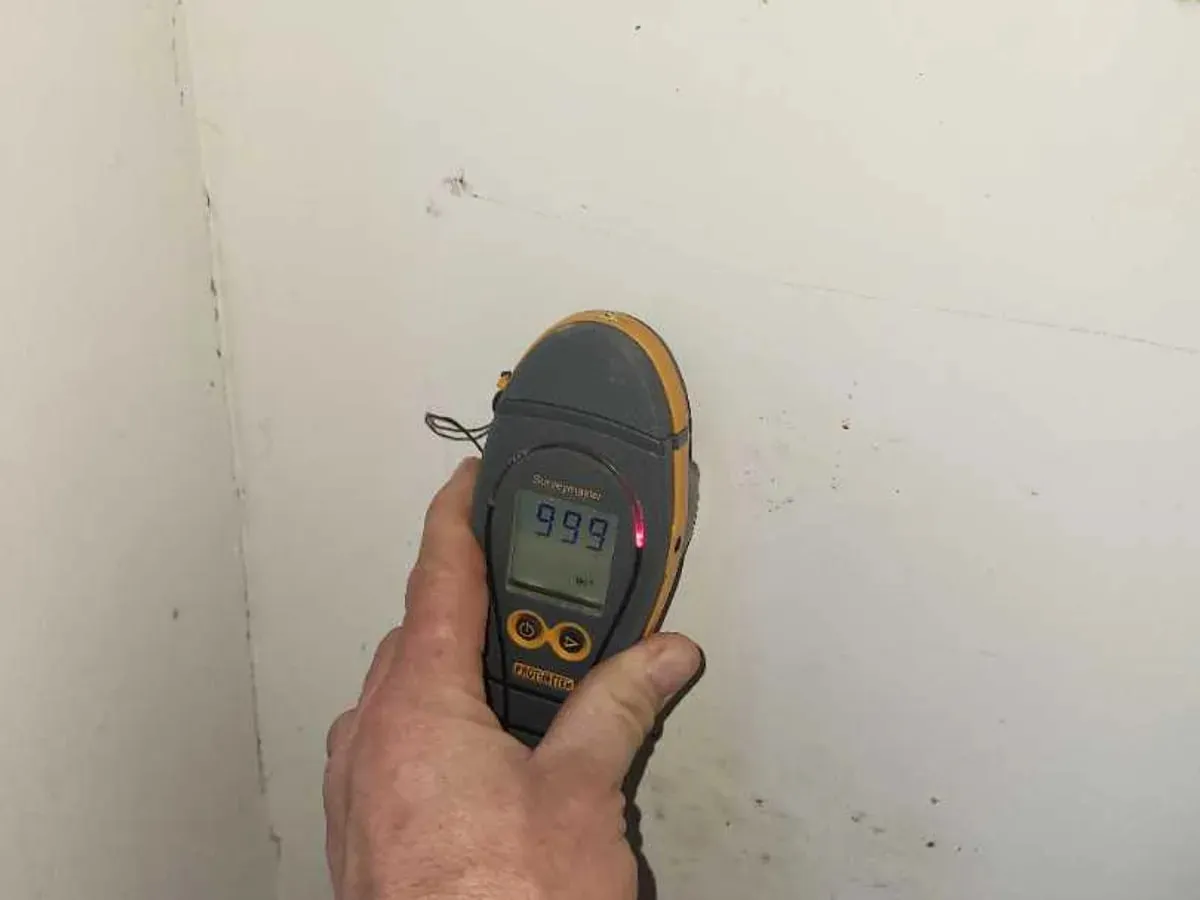
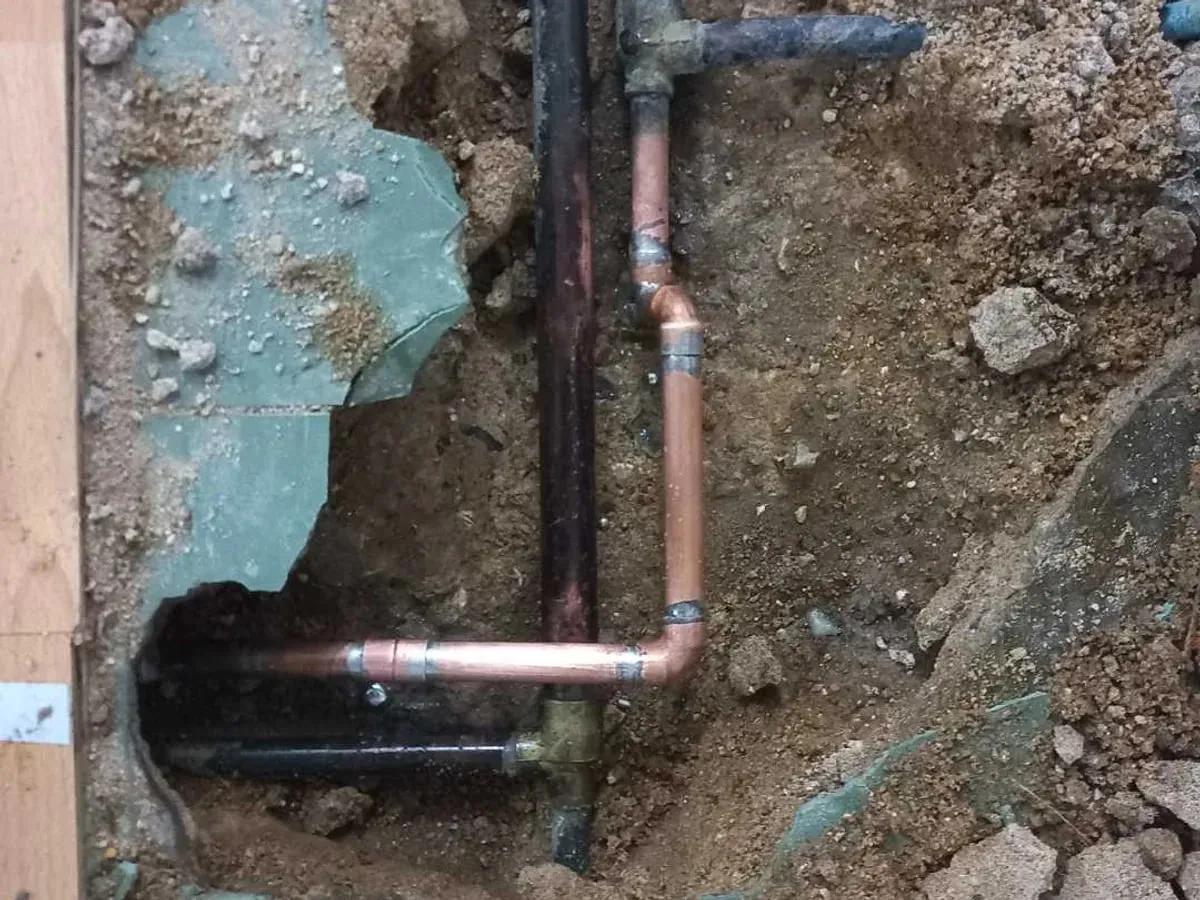
Thermal imaging found no unusual warm patch. The initial 2 bar test held for 30 minutes, and tracer gas and acoustic checks produced no leak signal. Opening the damp WC doorway revealed progressively wetter screed towards the hallway. A second opening in front of the radiator exposed the split bend.
Why this area was opened
The first opening at the damp WC doorway showed wetter screed towards the hallway. That new evidence led to a second opening in front of the radiator and the split bend.
The investigation, step by step
- 01Surveyed the floor thermally with the heating running.
- 02Drained the circuit and introduced tracer gas; the initial pressure test held.
- 03Checked for escaping gas and leak noise without a positive result.
- 04Opened the damp floor at the WC doorway and followed wetter screed into the hallway.
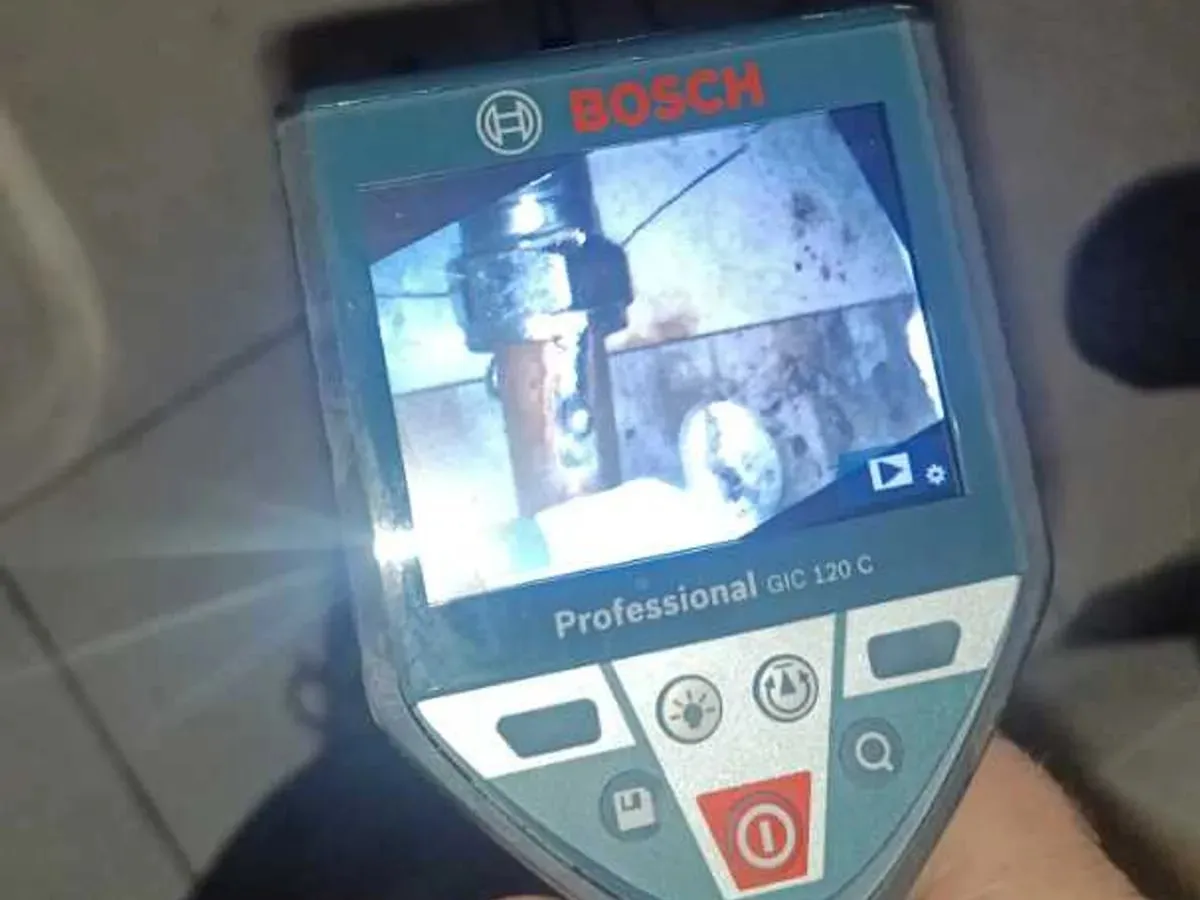
- 05Exposed a split copper bend in front of the hallway radiator.
- 06Replaced the failed section and pressure tested at 2 bar for 30 minutes with no loss.
What was found
- Found
- A machine-bent copper tube had ripped on the inside of its bend beneath the hallway floor. Water had tracked through the screed towards the WC.
- Repair
- The damaged pipe was replaced with 15mm copper tube, couplings and elbows. The circuit held 2 bar for 30 minutes, then was filled, vented and returned to operation.
- Recommended afterwards
- Reinstate the screed and flooring after the repair.
- Worth knowing
- This was not a non-invasive pinpoint: two areas were opened, guided by moisture. Gas, acoustic and thermal checks had not located the fault.
What this investigation shows
A negative initial pressure result and inconclusive instruments did not settle this investigation. Moisture guided progressive access; this was not a non-invasive pinpoint.
Read about agreeing access and repair work and understanding the recorded outcome.