Describe the layers above the pipe
Tell the office whether the floor is tiled, concrete, laminate or another finish, and whether you know what is underneath. Mention underfloor heating, previous extensions and earlier repairs. Plans or photographs from installation can help explain the likely routes.
A floor finish does not establish the pipe depth. Nor does a damp joint between tiles prove a defect lies directly below it. The choice of tests depends on the circuit, access and the evidence available.
Separate hot, cold and heating pipework
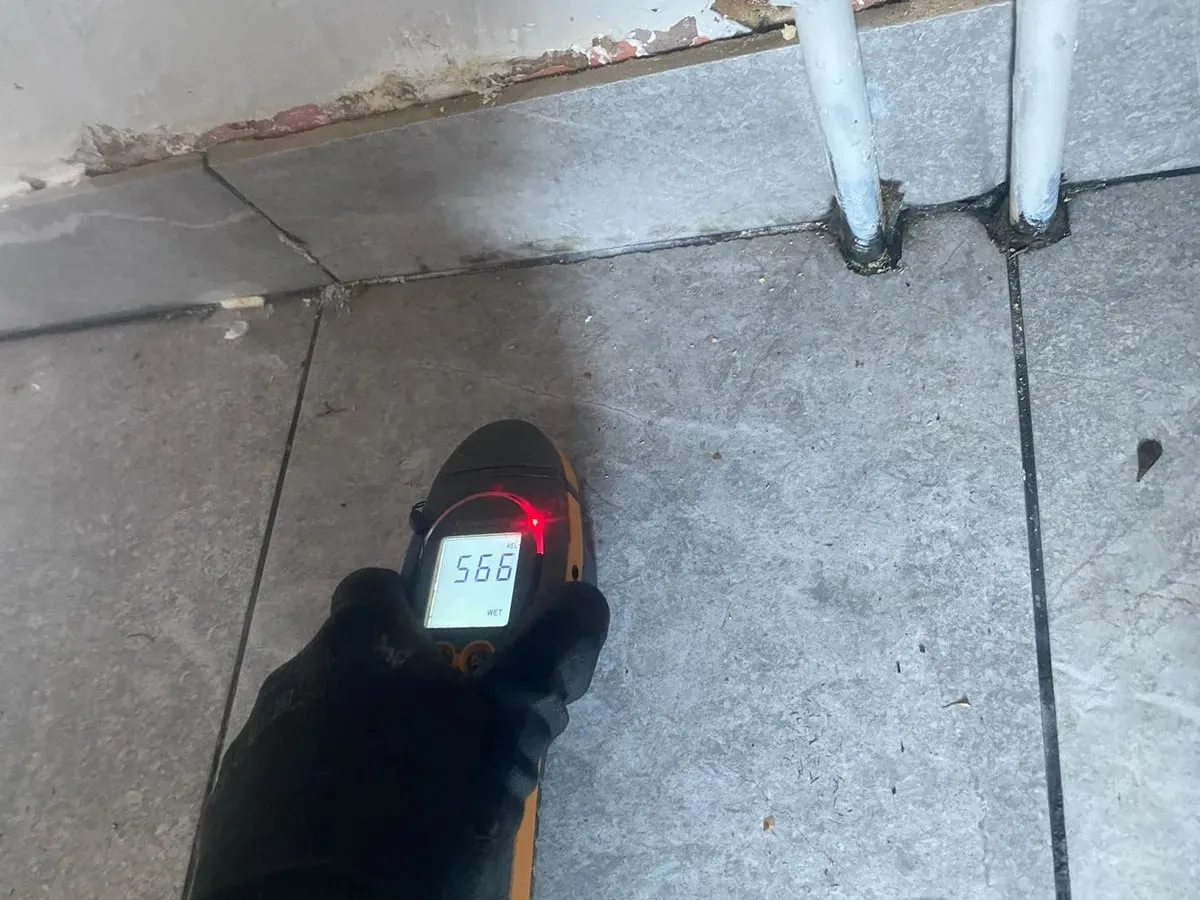
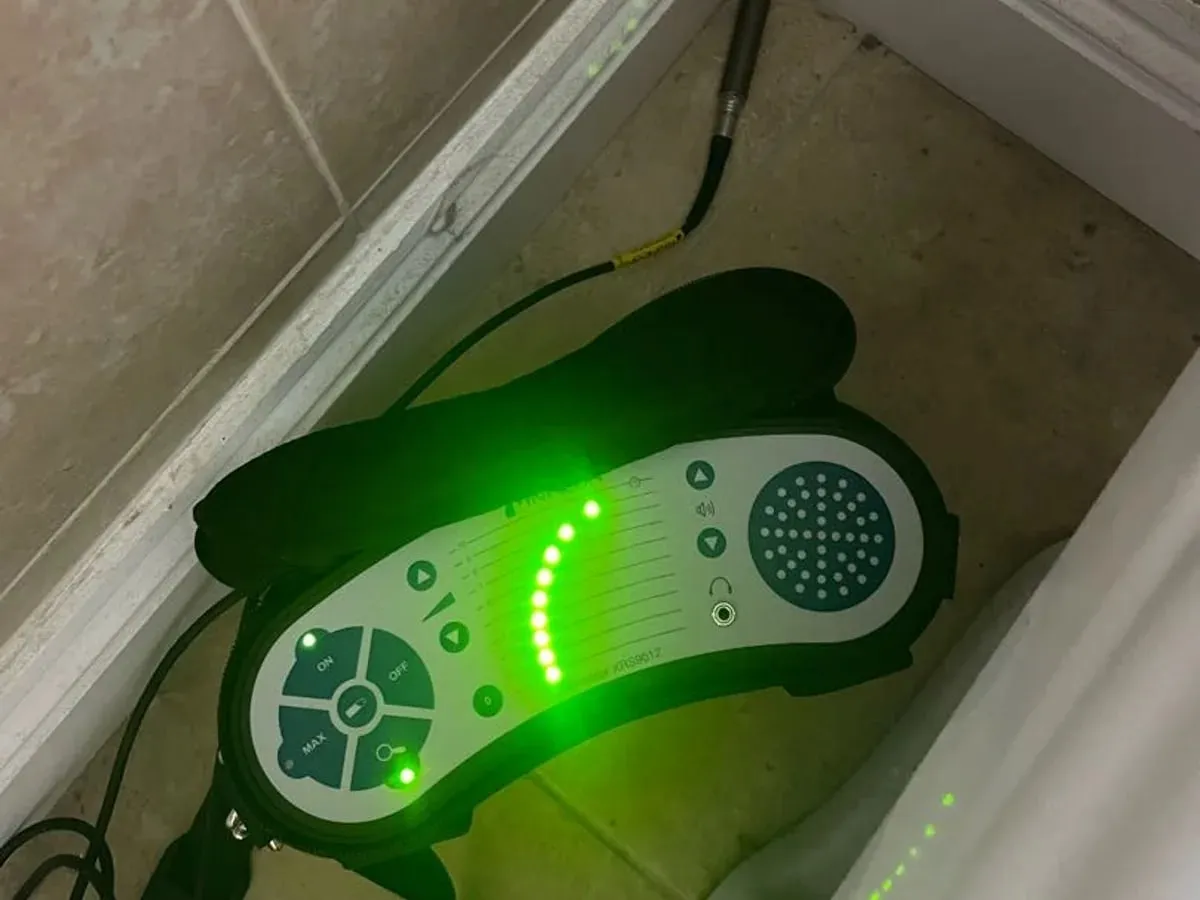
In March, testing distinguished a leaking hot circuit from a cold circuit that held pressure. Moisture and tracer gas then directed the search beneath the washing machine. Opening the floor revealed three nearby leaks, with further testing needed after the first finds.
For a heating leak, the boiler and accessible components also need consideration. Repeated pressure loss alone does not prove that the buried floor pipe is the cause.
Furniture and fittings can affect the opening
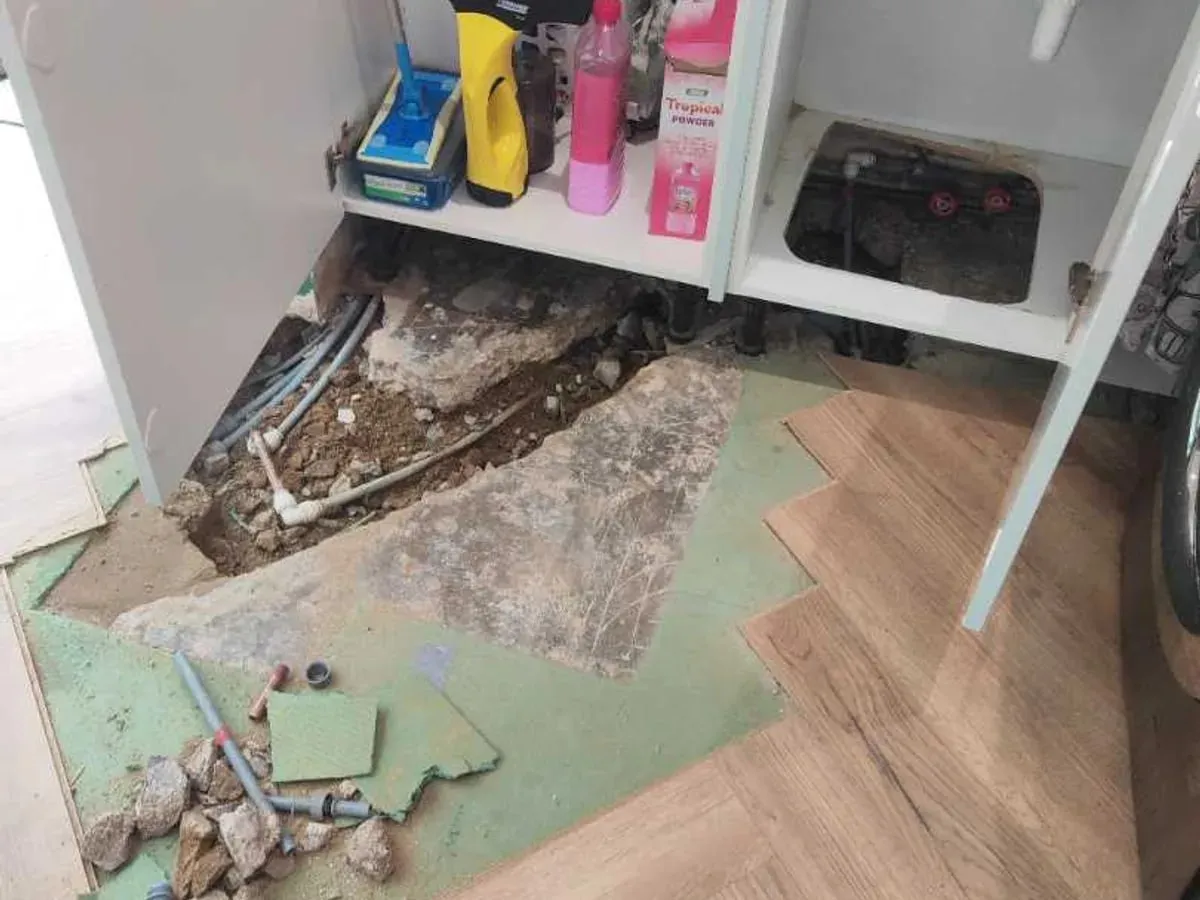
On the Billingshurst bathroom job, the toilet was removed before the tiles and concrete were opened. In the Hull kitchen, access involved the floor, screed and sink-unit base. These are examples of the working space required on those jobs, not a standard opening size.
Ask how units, sanitary fittings and floor finishes affect the proposed work. Let the engineer assess what needs moving; do not lift tiles or disconnect fittings simply to prepare.
A first find may not be the only fault
In Hull, testing after the first elbow was exposed led to another pinhole further along the pipe. In East Dereham, two areas were opened because the initial instruments had not located the fault.
Ask what the repair test shows and whether anything remains unresolved. A successful repair on one section is different from a guarantee about every pipe beneath the property.
Plan the drying and finish separately
Repairing a pipe does not remove water already held in the floor. The March and Hull records recommended drying before reinstatement. Billingshurst recorded a temporary repair and further work, rather than a completed permanent repair.
Keep any spare tiles and details of the existing flooring available, and establish who will organise reinstatement. Our access and repair guide sets out the questions to ask.